China Clay Supplier to Bangladesh for Industrial Use
07 October, 2026

10 September, 2026
Kaolin is a naturally occurring aluminosilicate mineral used in paints, ceramics, paper, plastics, rubber, adhesives, and construction products. For Saudi buyers, the main challenge is not simply finding kaolin. It is choosing the right grade with stable quality, suitable packaging, clear documents, and reliable shipment planning.
This guide explains how to compare refined and calcined grades, review technical specifications, and assess a kaolin clay supplier to Saudi Arabia. It also covers the information buyers should share when requesting a sample or bulk quotation from Jay Ganesh Minerals.

Kaolin is often described as a mineral filler, but its role can be much wider. Based on the grade and formulation, it may influence color, surface finish, viscosity, processing, plasticity, and production cost. Its value depends on mineral purity, particle distribution, and consistency from one batch to the next.
High-whiteness kaolin is useful in light-colored paints, ceramic products, paper, plastics, and other applications where appearance matters. It can support pigment extension and opacity enhancement in coating systems. However, final opacity depends on the full formulation, including pigments, binders, additives, and film thickness.
Buyers should ask how whiteness or brightness is measured. Two figures may appear similar while being based on different test methods. A valid comparison requires both the reported result and the test standard.
Fine particle size can support smoothness, dispersion, surface finish, and rheology control. Yet an average particle-size figure does not show the full picture. The complete distribution, including coarse particles and residue, may have a major effect on processing.
For paints and paper coatings, poor dispersion can increase mixing time or cause an uneven finish. In ceramic production, coarse residue can affect the body and fired surface. Buyers should therefore compare particle distribution and sieve residue, not just one nominal size.
Mineral purity is important when kaolin is used in white, pale, or fired products. Low iron content is often preferred because iron-bearing impurities can influence color and brightness. Titanium, moisture, and other trace components may also matter, depending on the application.
One of the first sourcing decisions is whether the application needs refined kaolin clay, calcined kaolin clay, or a grade developed for a specific process. The two forms have different properties and should not be treated as direct substitutes without trials.
Refined kaolin is processed to improve cleanliness and control particle size. Common stages may include washing, classification, drying, and milling. The exact process depends on the raw material and the required specification.
A refined grade may provide useful plasticity, smoothness, dispersion, and controlled particle size. Such properties can suit ceramic body formulation, paints, paper, rubber, and plastics. Performance still depends on the individual grade rather than the general product name.
During the calcination process, kaolin is heated under controlled conditions. This changes its mineral structure and reduces the plasticity found in hydrous or refined material. Calcination may also improve properties such as brightness, opacity, porosity, and functional performance.
Results vary with heating conditions, milling, and final particle engineering. Buyers should not assume that every calcined product offers the same opacity or dispersion. A technical data sheet and an application trial are still needed.
These are starting points, not universal rules. Laboratory testing followed by a production-scale trial is the safest way to confirm suitability.
Kaolin may act as a functional extender in architectural and industrial coatings. A suitable grade can contribute to opacity, suspension, surface finish, and viscosity control. It may also support brightness retention, although outdoor performance must be assessed as part of the complete coating system.
A paint producer may compare two grades with similar whiteness and choose the material that disperses faster and maintains steadier batch viscosity. This shows why a kaolin clay supplier should provide more than a color value alone.
In ceramic production, kaolin can contribute to plasticity, forming behavior, whiteness, and fired appearance. Tile, sanitaryware, and tableware producers should review iron and titanium levels, moisture, particle size, and loss on ignition.
A grade that performs well before firing may still produce an unsuitable fired color. Testing under the buyer’s actual firing cycle is therefore essential. The body recipe, kiln conditions, and interaction with other minerals also affect the result.
Fine kaolin is used in paper systems to support smoothness, brightness, printability, and ink response. Paper coating applications usually need tighter particle control than general filler uses. Abrasiveness, dispersion, and slurry behavior can also influence machinery and coating quality.
Kaolin can serve as a functional filler in plastics, masterbatch, rubber, cables, sealants, adhesives, and construction formulations. Depending on the system, it may help with surface appearance, dimensional stability, reinforcement, or cost control.
Compatibility is not universal. The base polymer, additives, mixing equipment, and target performance should guide grade selection.
A useful specification should include measurable physical and chemical properties. Saudi buyers should also confirm whether each figure is a typical result or a guaranteed limit.
Request a technical data sheet, certificate of analysis, and safety data sheet. Batch identification, retained samples, and agreed testing methods also help both parties investigate a quality concern.
When comparing results, make sure each kaolin powder supplier uses the same or an equivalent test method. A number without a clear testing basis may lead to a poor comparison.
Ask the prospective kaolin clay exporter to Saudi Arabia about raw-material control, refining, milling, testing, lead time, and contamination prevention. If calcined material is required, confirm how that grade is processed and checked.
A bulk kaolin clay supplier for Saudi industries should also explain how product consistency is maintained as order volumes increase. The approved sample and the commercial shipment should follow the same agreed specification.
A dependable supplier should understand the intended use before suggesting a grade. Useful support includes document review, sample coordination, clear communication during trials, and a defined process for handling complaints.
Buyers searching for a kaolin mineral supplier should avoid relying on broad claims such as “suitable for every industry.” Paint, ceramic, paper, and polymer applications often need different properties.
A kaolin clay manufacturer processes the mineral, while an exporter manages overseas sales and shipping. A local distributor may hold stock and offer shorter delivery times. One business may perform more than one of these roles.
An overseas producer serving Saudi customers should not be called a kaolin clay manufacturer in Saudi Arabia unless it has a verified local production facility. Buyers should confirm the processing location, material origin, and contracting entity before placing an order.
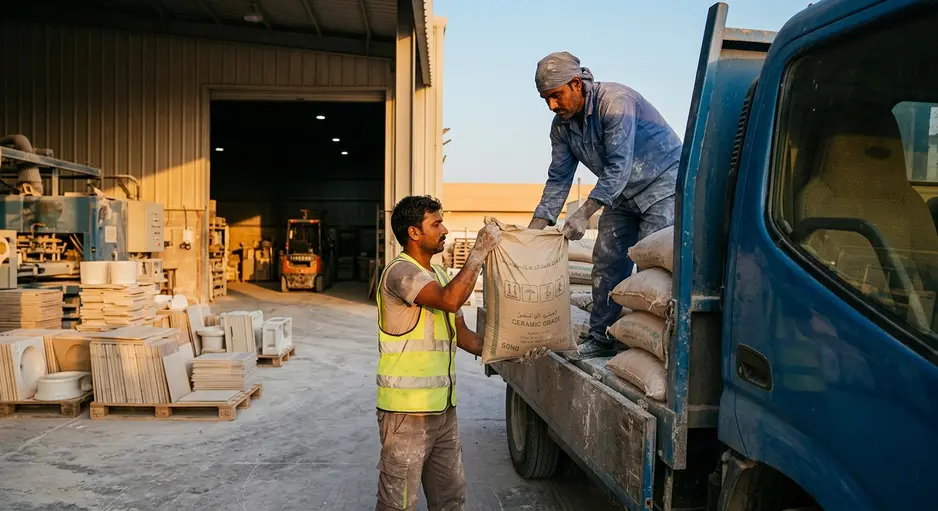
Fine mineral powder must be protected from moisture and contamination during storage and transport. Buyers should discuss industrial bags, bulk bags, palletization, container loading, and moisture protection with the supplier. Available formats and quantities should be confirmed before quotation.
Bulk mineral logistics depend on order volume, container availability, delivery destination, transit time, and the chosen Incoterm. The Saudi entry port should be selected according to the final destination and shipping route.
Kaolin and other kaolinic clays generally fall within HS heading 2507. The complete tariff code and current Saudi requirements should be confirmed with the buyer’s customs broker or relevant authority before dispatch.

Saudi buyers can approach Jay Ganesh Minerals with a clear technical and commercial request. The inquiry should state the application, target properties, required volume, packaging preference, delivery point, and documentation needs.
Before approval, buyers should request confirmation of the available kaolin grades, processing scope, test data, packaging formats, order requirements, and dispatch schedule. Any claim about capacity, certification, or previous Saudi shipments should be verified directly through current company documents.
For a focused response, share your end use, target specification, quantity, packaging, and Saudi delivery port when requesting a sample or export quotation.
Kaolin Clay Manufacturer & Exporter to Saudi Arabia
Selecting a kaolin clay supplier to Saudi Arabia requires a balance of technical fit, quality consistency, documentation, packaging, and logistics. Start with a precise specification, compare results using the same test methods, and test a representative sample under real production conditions.
A reliable kaolin clay exporter to Saudi Arabia should provide clear answers rather than broad promises. By sharing complete application and delivery details with Jay Ganesh Minerals, Saudi buyers can request a relevant technical recommendation and a more accurate bulk quotation.
Kaolin is used in paints, coatings, ceramic products, paper, plastics, rubber, adhesives, sealants, and construction materials. The required grade varies by application, so buyers should match particle size, purity, moisture, and other properties to their production process.
Refined kaolin is processed to improve cleanliness and particle control while retaining useful plasticity. Calcined material is heat-treated, which reduces plasticity and may improve opacity, brightness, or porosity. Final selection should be confirmed through application testing.
The right grade depends on particle distribution, brightness, oil absorption, dispersion, opacity, and rheology. There is no single best grade for every coating. A laboratory drawdown and production trial will provide a more reliable answer.
Kaolin can be shipped in industrial or bulk packaging, subject to the supplier’s verified options. Buyers should confirm bag format, palletization, moisture protection, container loading, order quantity, and delivery terms before placing an order.

Whatsapp Chatx
Hi! Click one of our representatives below to chat on WhatsApp or send us email to jrt@jayganeshminerals.com

|
Mr. RAJESH +91 99130 87000 |
|
|
Mr. JIGNESH +91 89800 70055 |