
Global Industrial Mineral Trends in 2026
02 July, 2026

03 March, 2026
Clay is one of the oldest materials known to humankind, shaping everything from functional dishes to artistic masterpieces. However, not all clay is created equal. In the ceramic world, understanding the types of clay and their properties is crucial for producing high‑quality, durable products especially when choosing clay for industrial uses.
From raw, natural deposits to highly refined materials, each clay type offers unique characteristics that influence texture, strength, plasticity, and firing behavior. This comprehensive guide explains the range of clays used in the ceramic industry and how they can make or break your final product.
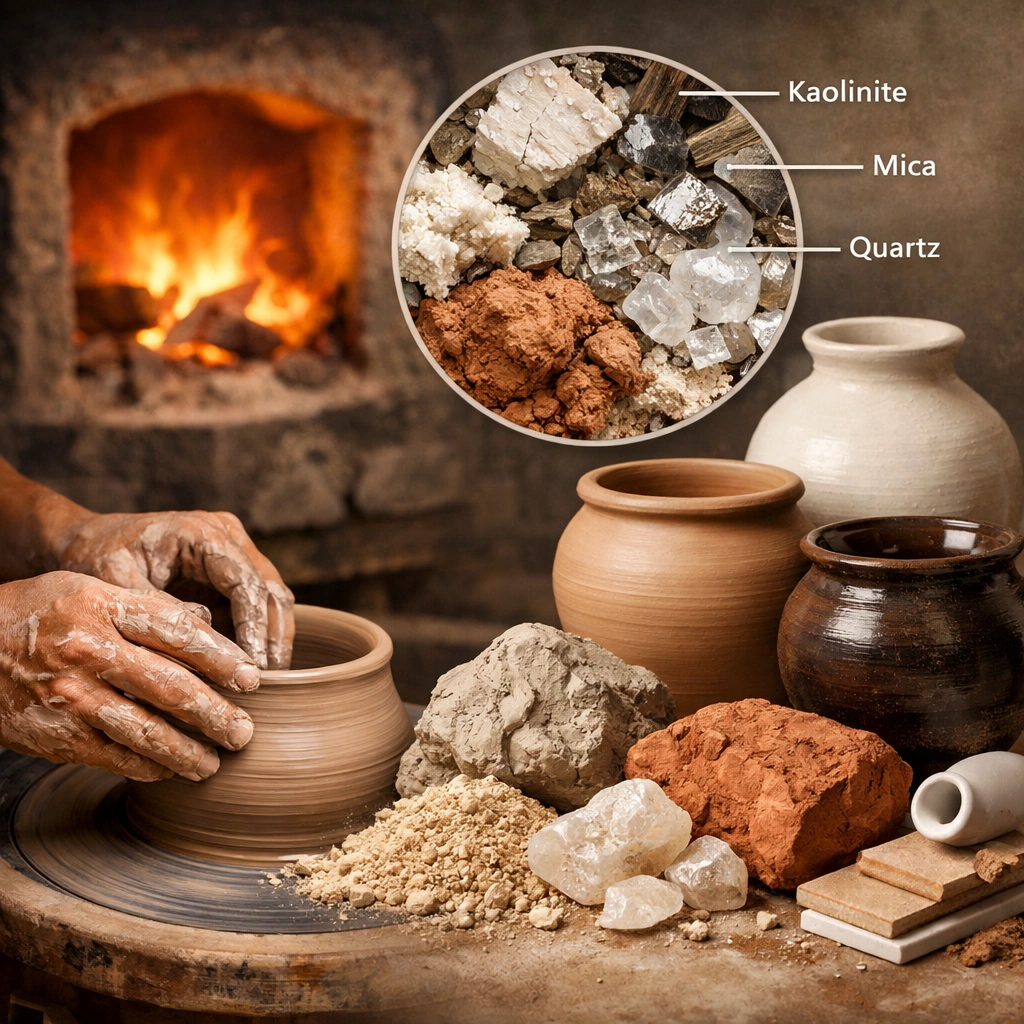
Clay is a naturally occurring earthy material composed mainly of fine mineral particles. These particles are so small that they hold water well, allowing clay to become moldable and plastic when wet. When fired at high temperatures, clay undergoes chemical transformation and becomes hard, durable, and heat resistant.
At its core, clay is a combination of minerals like kaolinite, mica, and quartz. Its mineralogical makeup determines its behavior from softness and plasticity to color and firing range.
Whether used in artistic pottery or large‑scale industrial ceramics, clay remains the backbone of ceramic manufacturing.
Clay is not a uniform material it is a broad family of fine-grained aluminium silicate minerals, each with distinct chemical and physical profiles. Choosing the wrong clay can significantly affect the ceramic production process at multiple stages:
Forming stage: Clay plasticity and workability dictate how easily it can be shaped, extruded, or molded. Insufficient plasticity leads to cracking, while overly plastic clay can warp during drying.
Drying stage: Shrinkage control is crucial. Improper clay selection can result in deformation or cracks as water evaporates.
Firing stage: The type of clay determines vitrification, color development, and final mechanical strength. A clay with high iron content may discolor whitewares, while low-refractoriness clay may deform at high firing temperatures.
Industrial ceramic production including floor tiles, sanitaryware, and refractory products demands stricter clay specifications than decorative or artisanal ceramics. Key quality parameters include plasticity, particle size distribution, iron content, refractoriness, and fired color. A deep understanding of these characteristics ensures optimal ceramic body formulation and consistent production quality.
Next, we’ll explore the major types of clay used in industrial ceramics and how each contributes to specific product requirements.
Here’s a closer look at the most important clay types in ceramics.
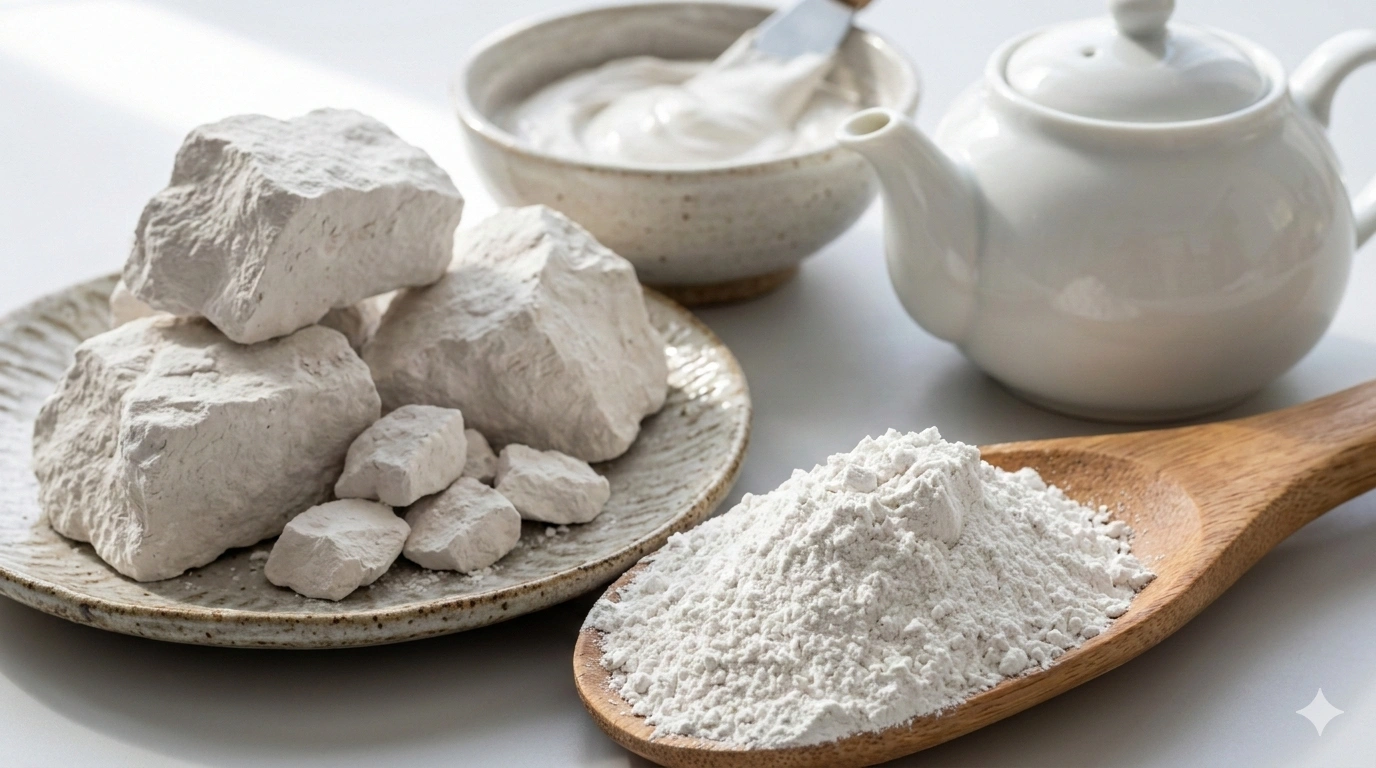
Kaolin clay is one of the most widely known and critically important types of clay in the ceramic industry. It’s often referred to as “china clay” because of its role in producing fine porcelain.
Key Properties:
Low plasticity
Pure white color after firing
High refractory capability (resistance to heat)
Produces smooth, fine surfaces
Kaolin is ideal for:
Porcelain
Bone china
High‑temperature ceramics
Due to its purity, it’s often mixed with other clays to enhance plasticity while maintaining strength.
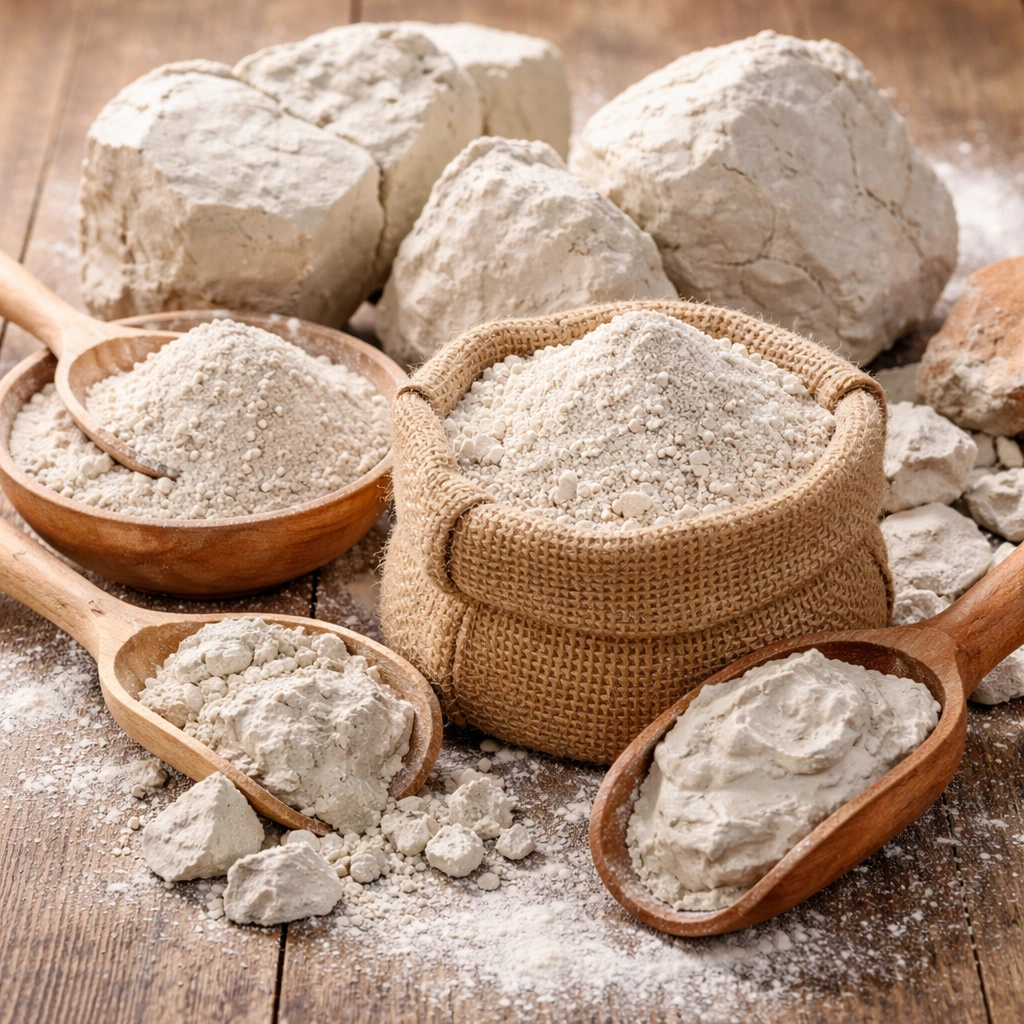
Ball clay is known for excellent plasticity and strong bonding properties. Deposits of ball clay can be found in layers beneath the Earth’s surface and are typically mined, dried, and refined before use.
Key Properties:
Highly plastic
Great workability
Good strength after firing
Because it’s soft yet strong when fired, ball clay improves workability in ceramic bodies, making it a common choice when blending with less plastic clays like kaolin.
This makes ball clay especially popular in industrial ceramic formulas where consistent shaping and molding are needed.
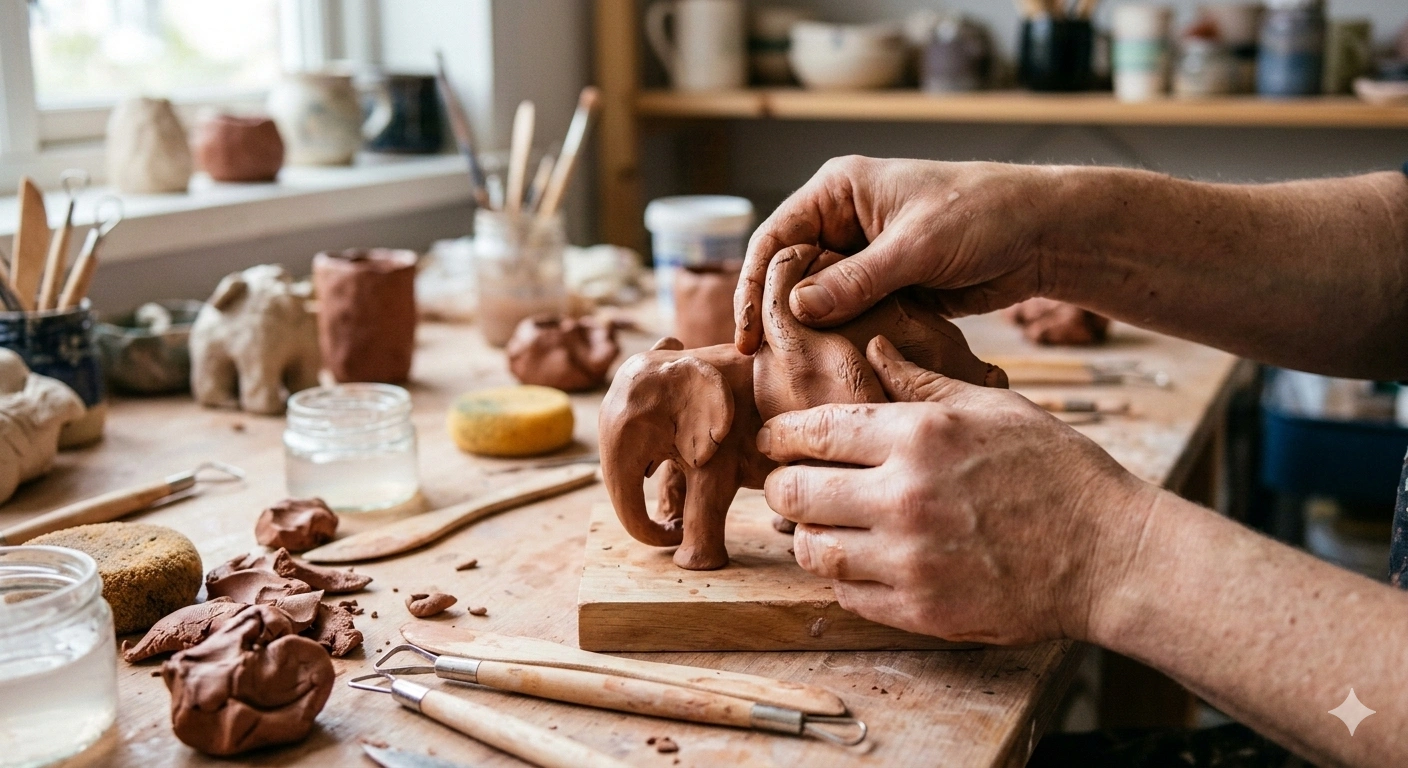
Plastic clay refers to clays that are easy to mold and shape due to their flexible nature. They contain enough fine particles and water content to make forming simple and smooth.
Key Properties:
Highly workable
Retains shapes well
Good for hand shaping and wheel work
Plastic clays are essential in both artistic pottery and industrial shaping processes. Their pliability helps ceramists achieve intricate designs and uniform parts.
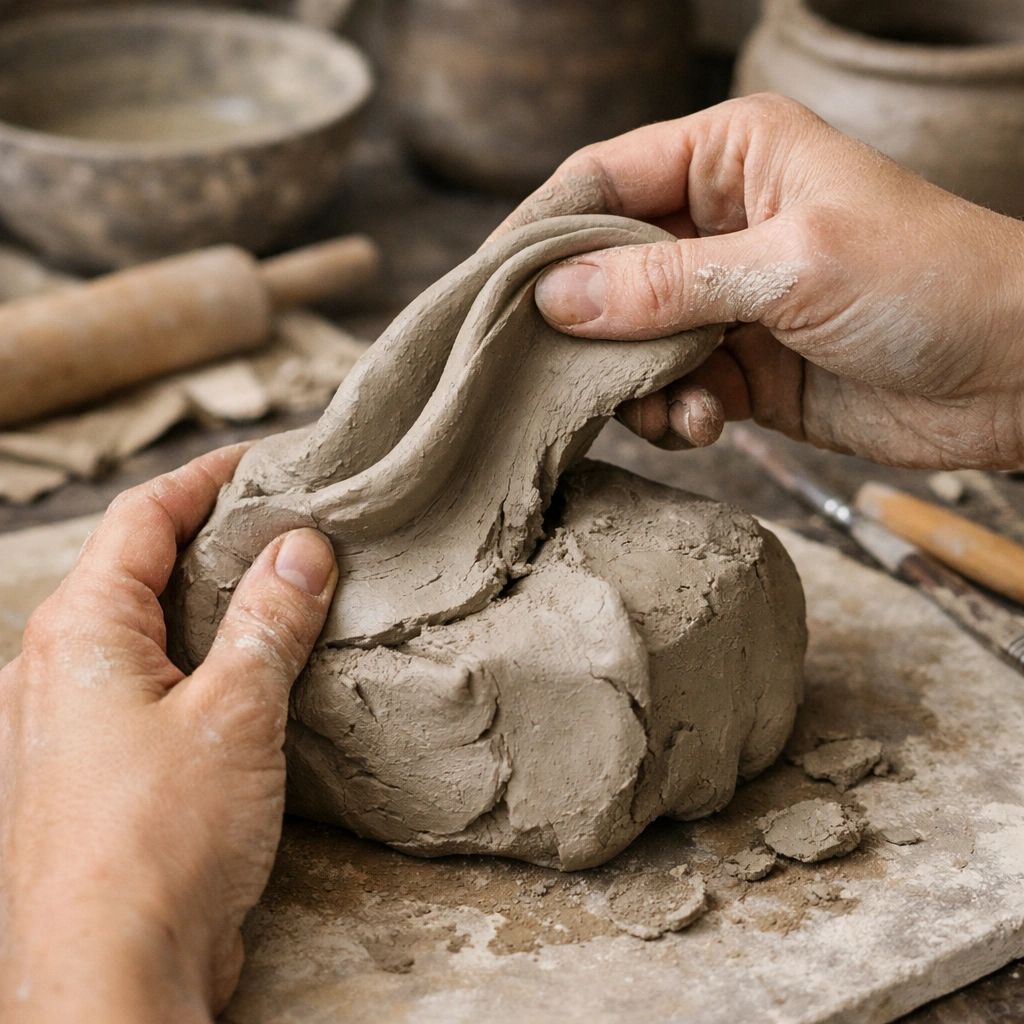
Semi‑plastic clay is a middle ground not as soft as plastic clay but still flexible enough for many shaping techniques.
Key Properties:
Moderate plasticity
Easier to handle than rigid clays
Lower shrinkage compared to highly plastic clay
These clays are often used in products that require a balance between workability and structural stability.
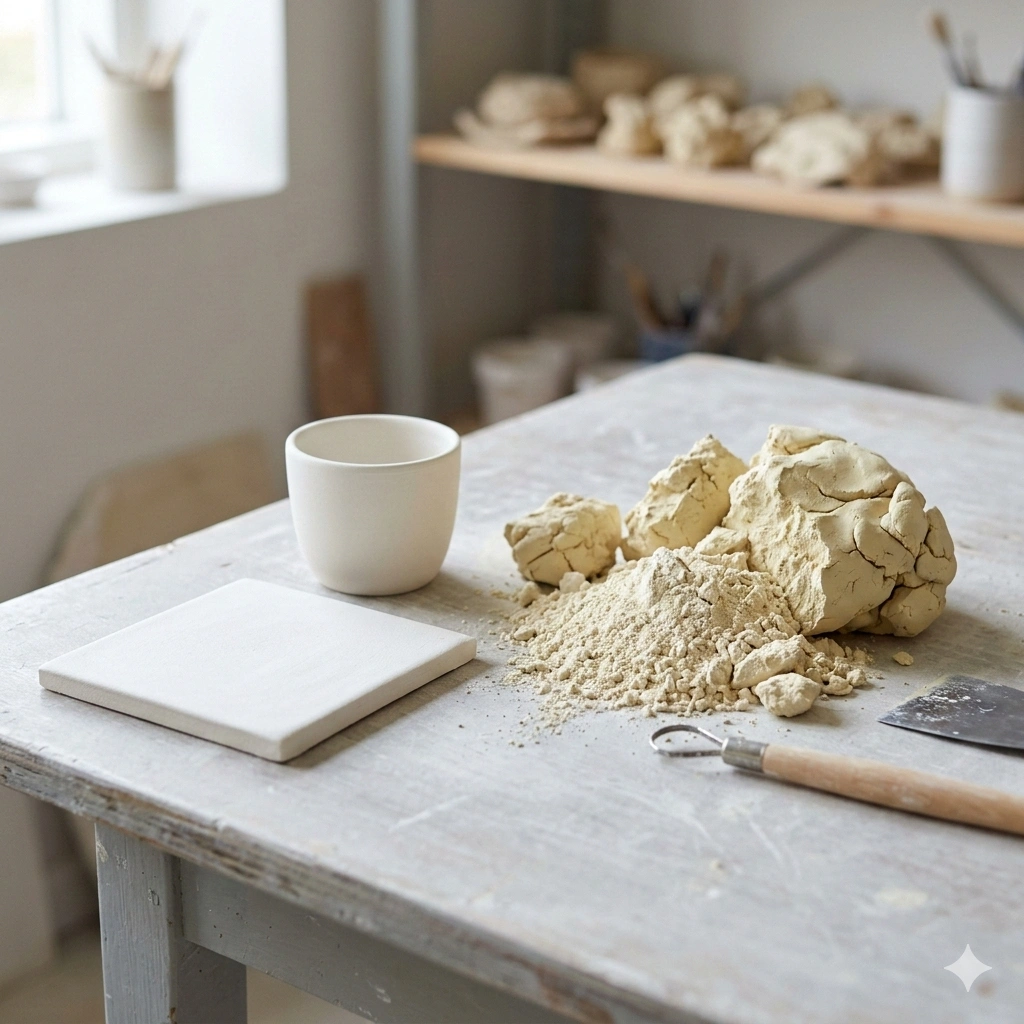
WBC clay, also known as white burning clay or white clay, is prized for its ability to fire to a clean, bright color without impurities.
Key Properties:
Low iron content (minimal color distortion)
High whiteness after firing
Stable at a wide range of kiln temperatures
This type of clay is ideal for producing light‑colored tiles, sanitary wares, and decorative ceramics. Its clean appearance makes it a preferred choice when color consistency is paramount.
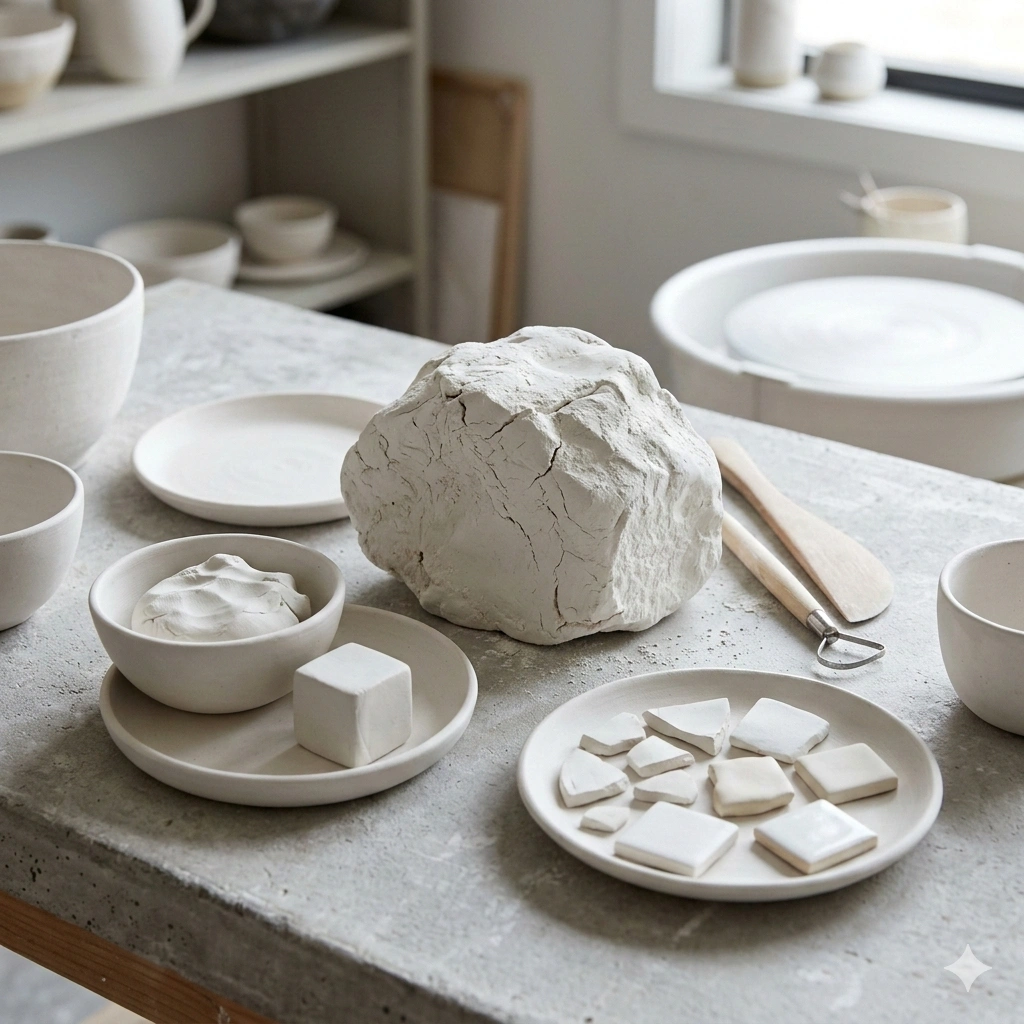
White clay broadly refers to clay materials that fire to a white or near‑white finish. Kaolin is technically a type of white clay, but the term can also apply to other refined clays that share a similar look after firing.
Key Properties:
Bright white finish
Often used for fine tableware
Minimal impurities
White clay is favored for premium ceramics where final appearance and purity are important.
In modern ceramic manufacturing, processed clay plays a major role. These are clay materials that have been refined, milled, and sometimes chemically treated to enhance their performance.
Processed clays are engineered to:
Improve plasticity
Increase strength
Reduce impurities
Improve consistency
Zirconium Silicate isn’t technically a clay, but it’s a valuable additive in industrial ceramics. It is often used to improve whiteness, opacity, and durability of ceramic glazes and bodies.
Why it’s used:
Excellent whiteness and brightness
Increases chemical resistance
Improves surface quality
For manufacturers seeking premium aesthetics and performance, zirconium silicate is a game‑changer.
Tile bodies are typically composed of Kaolin Clay, Ball Clay, Semi Plastic Clay, feldspar, and quartz. WBC or high-brightness Kaolin ensures white fired bodies for polished tiles, while Zirconium Silicate improves glaze opacity and scratch resistance. Processed Clay ensures consistency during extrusion and pressing.
Casting slips rely on Kaolin Clay, WBC Ball Clay, and feldspar for fluidity and mold release. High Ball Clay plasticity is critical to form complex shapes without cracking. Zirconium Silicate in glazes delivers brilliant white, non-porous surfaces. Typical firing ranges: 1200–1280°C.
Fire Clay and high-alumina Plastic Clay dominate refractory brick production. Processed Clay ensures consistent alumina-to-silica ratios, critical for thermal performance. Applications include furnace linings, kiln furniture, blast furnace bricks, and crucibles.
Ultra-pure Kaolin Clay and calcined White Clay are used in electronic ceramics and bioceramics. Zirconium Silicate enhances wear resistance and surface hardness in cutting tools and technical ceramic components. Tight chemical and particle size specifications are essential.
Plasticity Index: Higher plasticity improves forming but increases shrinkage
Particle Size Distribution: Finer particles improve surface finish and green strength
ISO Brightness / Fired Whiteness: Essential for whitewares and sanitaryware
Iron/Titanium Oxides: Even trace amounts cause discoloration in white-firing products
Refractoriness (PCE Value): Determines maximum firing temperature
Dry and Fired Shrinkage: Ensures dimensional accuracy
Water Absorption: Differentiates porous, semi-vitrified, and fully vitrified ceramics
Chemical Composition (Al₂O₃/SiO₂ ratio): Governs firing behavior, strength, and thermal stability
Always request a full TDS and CoA before finalizing clay procurement to guarantee industrial performance.
Define your product category first: tile body, sanitaryware slip, refractory, or glaze
Request TDS and CoA for every clay grade
Conduct small trial batches before bulk procurement
Evaluate supplier batch-to-batch consistency
Prefer suppliers offering multiple clay types from a single source
Look for ISO 9001:2015 certification, export compliance, and third-party lab validation
India, particularly Rajasthan and Gujarat, provides a full portfolio: Kaolin, Ball, WBC, Semi Plastic, and Processed Clay
Build long-term supplier relationships to ensure stable production schedules
Jay Ganesh Minerals is a trusted supplier of all major types of clay for industrial ceramics. Our portfolio includes Kaolin Clay, Ball Clay, WBC Clay, Plastic Clay, Semi Plastic Clay, Processed Clay, White Clay, and Zirconium Silicate.
With in-house mineral processing capabilities wet processing, calcination, grinding, and customized particle sizing we ensure consistent quality. All shipments come with ISO-certified CoA reports, supporting high-volume ceramic production for tiles, sanitaryware, refractories, and technical ceramics.
Industrial Mineral Clay Exporter
The ceramic industry thrives on the careful selection of clay types. Kaolin, Ball, WBC, Plastic, Semi Plastic, Processed, White Clay, and Zirconium Silicate each play a distinct role in achieving whiteness, strength, plasticity, and surface quality.
Understanding clay properties, industrial roles, and supplier quality ensures smart, cost-effective procurement. For reliable, full-portfolio sourcing of clay for industrial uses, Jay Ganesh Minerals stands as a trusted partner for all ceramic applications.
The major types include kaolin clay, ball clay, plastic clay, semi‑plastic clay, WBC clay, white clay, and processed clay materials.
Clay choice influences plasticity, firing behavior, strength, and final surface quality. Selecting the right clay can improve durability and appearance.
Kaolin clay and ball clay are widely used due to their performance characteristics in shaping, firing, and finished properties.
While they can overlap, industrial clays often undergo more processing and formulation to meet specific performance standards.

Whatsapp Chatx
Hi! Click one of our representatives below to chat on WhatsApp or send us email to jrt@jayganeshminerals.com

|
Mr. RAJESH +91 99130 87000 |
|
|
Mr. JIGNESH +91 89800 70055 |