
Global Industrial Mineral Trends in 2026
02 July, 2026

05 May, 2026
Zirconium silicate plays a foundational role in modern ceramic tile production, especially in porcelain and vitrified tiles where whiteness, opacity, and durability define product value. In over a decade of experience working with tile manufacturers across India and export-focused units, we can see how the right grade and formulation of zirconium silicate for tiles manufacturing can significantly improve glaze performance while optimizing raw material cost.
Whether you are a production head, procurement manager, or ceramic technologist, understanding how zirconium silicate for tiles manufacturing influences quality, firing behavior, and overall ROI is essential. This guide covers technical insights, grade selection, cost considerations, and supplier evaluation based on extensive industry work with large and mid-sized tile plants.
Zircon is a naturally occurring mineral derived from zircon sand deposits. Through controlled processing and micronization, it becomes zirconium silicate powder suitable for ceramic applications. The purity, particle size, and brightness of this processed material determine its effectiveness in tile bodies and glazes.
There is a technical distinction between raw zircon sand and processed zircon sand zirconium silicate powder. The latter undergoes fine grinding and classification to meet the particle size distribution required for ceramic performance. Industrial zirconium silicate for tile manufacturers is engineered for consistent opacity and dispersion behavior.
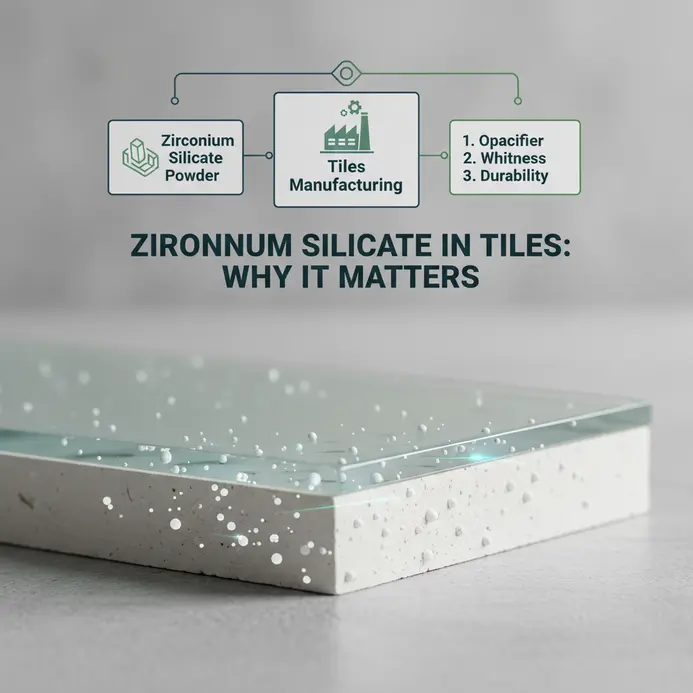
The zirconium silicate uses in ceramics are diverse and performance-driven. It functions as both an opacifier and a structural enhancer in ceramic matrices.
Zirconium silicate raw material for porcelain ensures bright white surfaces demanded by premium markets. In vitrified tiles, it contributes to translucency control and dimensional stability during firing. Optimized zirconium silicate dosing can improve surface uniformity by over 15%.
One of the primary benefits of zirconium silicate in tile manufacturing is enhanced whiteness. Zirconium silicate in tiles for whiteness and brightness enables manufacturers to meet export-grade visual standards.
Compared to alternative whitening agents, zirconium silicate offers:
Zirconium silicate powder for tile glazes is widely used in glaze formulations to improve opacity and smoothness. The zirconium silicate glaze recipe for tiles typically includes 5–12% zircon depending on the desired coverage.
Particle size optimization is critical. Finer zirconium silicate particle size for tile glazes ensures uniform dispersion and minimizes surface defects such as pinholes or crawling.
Zirconium silicate enhances abrasion resistance in high-traffic flooring. In commercial installations such as malls and airports, tiles containing optimized zircon content demonstrate superior stain resistance and reduced surface wear.
Although zirconium silicate tiles raw material cost fluctuates with global zircon sand prices, proper formulation reduces waste and rejects. Proven strategies include optimizing micronized grades to achieve the same opacity at lower dosage levels.
Selecting the correct zirconium silicate grade for tile bodies differs from glaze applications. Body grades typically prioritize whiteness and bulk density, while glaze grades focus on fine particle size and dispersion.
Zirconium silicate for porcelain tiles usually requires higher brightness and tighter particle size control to avoid firing defects.
The zirconium silicate particle size for tile glazes directly impacts opacity and finish. Micronized grades offer smoother surfaces and better suspension stability.
Working with zirconium silicate supplier for B2B ensures consistent quality and documented compliance with standards.
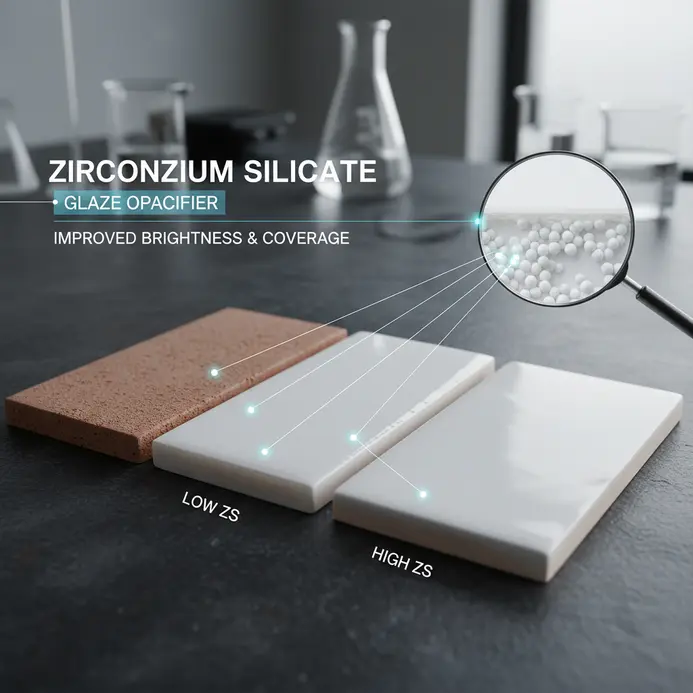
The debate around zirconium silicate vs zirconium oxide in tiles often centers on cost. Zirconium oxide provides higher opacity but at a significantly higher price point.
Zirconium silicate bulk price per ton India is considerably more economical, making it the preferred choice for large-scale tile production.
For zirconium silicate for digital printing tiles, surface uniformity is crucial. In most commercial applications, zirconium silicate for tiles manufacturing provides the optimal balance between cost and performance.
In one project with exporter, we optimized zirconium silicate coating for ceramic tiles by adjusting micronized grades and improving dispersion. The result was an 18% increase in opacity with 6% lower material usage.
Buy zirconium silicate bulk India through long-term contracts with reliable zirconium silicate suppliers in India. This approach stabilizes supply and protects against global zircon sand volatility.
Zirconium silicate suppliers and exporters serve domestic and international markets. Partnering with a reputed zirconium silicate export manufacturer ensures reliable logistics and documentation compliance.
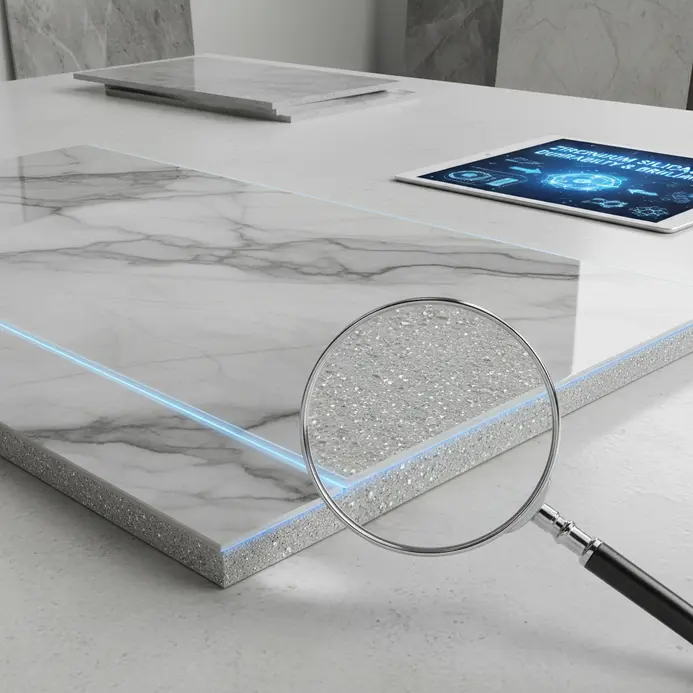
Avoid agglomeration by ensuring high-speed mixing and proper deflocculant use. Suspension stability directly impacts glaze finish quality.
Refractory zirconium silicate for tile kilns withstands high firing temperatures without degradation. Ensure compatibility with firing cycles above 1150°C for porcelain tiles.
Zirconium silicate for digital printing tiles ensures smooth surfaces and consistent ink adhesion. Controlled particle size reduces surface irregularities.
Export markets increasingly demand ultra-white porcelain bodies. This drives demand for high-purity zirconium silicate grades.
Buy zircon sand for ceramic tiles responsibly through verified supply chains. Sustainable sourcing ensures long-term cost stability.
Advanced micronization enables enhanced opacity at lower dosages, improving cost-performance balance for industrial zirconium silicate for tile manufacturers.
Buy the Zirconium Silicate for Your Production Needs
If you are seeking industrial zirconium silicate for tile manufacturers with consistent quality and export-ready supply, partner with an experienced manufacturer Jay Ganesh Minerals. The right zirconium silicate supplier for tiles will help optimize formulation, control costs, and enhance final tile performance.
Work with a trusted supplier to ensure your tile production remains competitive in both domestic and global markets.
Zirconium silicate improves opacity, whiteness, mechanical strength, and chemical resistance in ceramic tiles.
For most commercial applications, zirconium silicate offers better cost efficiency with sufficient opacity compared to zirconium oxide.
Typical glaze formulations use 5–12% zirconium silicate depending on opacity requirements.
Zirconium silicate bulk price per tonne India depends on global zircon sand prices, grade, and order volume.

Whatsapp Chatx
Hi! Click one of our representatives below to chat on WhatsApp or send us email to jrt@jayganeshminerals.com

|
Mr. RAJESH +91 99130 87000 |
|
|
Mr. JIGNESH +91 89800 70055 |