
Global Industrial Mineral Trends in 2026
02 July, 2026

02 June, 2026
Choosing the right ball clay for ceramic tiles manufacturing can make or break your tile quality. From plasticity to firing strength, ball clay plays a central role in how tiles perform during production and in real-world use. This guide walks you through everything buyers and manufacturers need to know, from technical properties to sourcing and pricing.

Ball clay is a fine-grained, highly plastic clay mainly composed of kaolinite, along with minerals like quartz and mica. It is valued for its excellent binding ability, which helps hold ceramic particles together during shaping and drying.
Key properties include:
In tile production, ball clay acts as a binder. It improves shaping during pressing or extrusion and enhances the strength of unfired tiles. Without it, tile bodies would lack cohesion and could crack during processing.
Both ball and kaolin clay are used in tile bodies, but they serve different roles:
Most formulations use a blend of both for balance.
Ball clay enhances moldability and reduces cracking during shaping. Its fine particles fill gaps between coarser materials, leading to better compaction and improved mechanical strength in green tiles.
Plasticity affects how easily the clay can be shaped. A consistent particle size distribution ensures uniform mixing and predictable results during tile production.
Moisture levels influence drying time and defect formation. Poor drying behavior can lead to warping or cracks, especially in large-format tiles.
High-quality ball clay offers strong green strength and controlled firing shrinkage. This helps maintain tile dimensions and reduces rejection rates.
LOI indicates how much weight the clay loses during firing. It reflects organic content and mineral composition, both of which impact tile color and strength.
A reliable supplier provides a ball clay technical data sheet for tile formulation with details like:
Porcelain tiles require refined ball clay with low impurities, while glazed tiles benefit from clay that enhances surface finish and glaze adhesion.
High plasticity grades are ideal for complex tile shapes and large slabs, where flexibility during forming is critical.
Different regions produce distinct types:
Porcelain stoneware needs low iron content and high strength, while wall tiles can use more flexible compositions with slightly higher impurities.
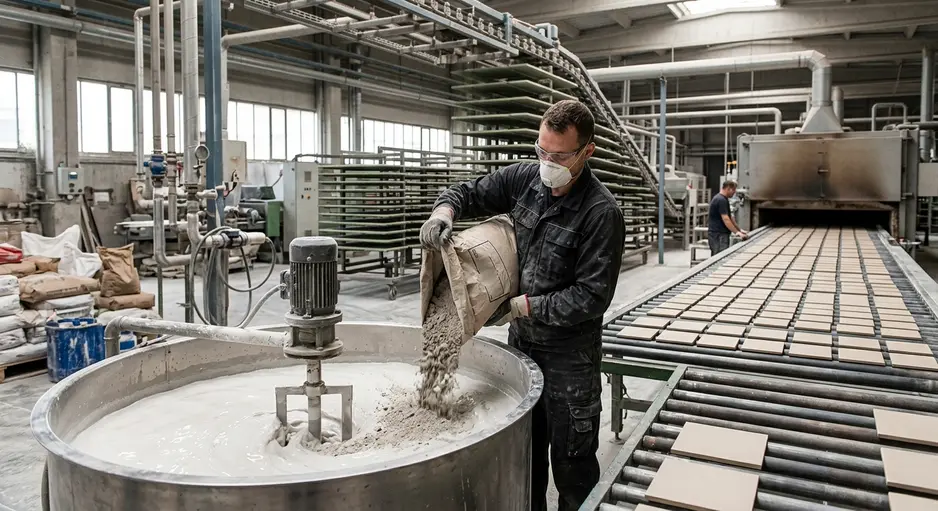
Feldspar acts as a flux, while ball clay provides plasticity. Together, they create a balanced ceramic body that forms well and fires efficiently.
A typical formulation may include:
Exact ratios vary based on tile type and production method.
For digital inkjet tiles, smooth surfaces are critical. Quality ball clay for digital inkjet tiles helps achieve a uniform finish and better print clarity.
Ball clay must work well with glaze materials to prevent defects like pinholes or poor adhesion.
Reliable suppliers offer consistent quality, large-scale supply, and technical support for manufacturers.
Ball clay exporters from India are known for competitive pricing and growing quality standards, making them a strong option for global buyers.
Look for suppliers that follow strict QA testing for particle size, LOI, and impurities.
The ball clay price per ton India is generally competitive compared to Western markets. Prices vary depending on grade, processing, and transport.
Bulk shipping requires proper packaging, moisture control, and efficient port handling.
Typical export documents include invoices, packing lists, certificates of origin, and quality reports.
Ball clay is extracted and refined through washing, screening, and blending to remove impurities and ensure uniformity.
Proper drying ensures consistent moisture levels, which is crucial for predictable shaping and firing.
Regular testing helps maintain product quality and reduces production risks.
Consistency in raw materials leads to fewer defects and stable production output.
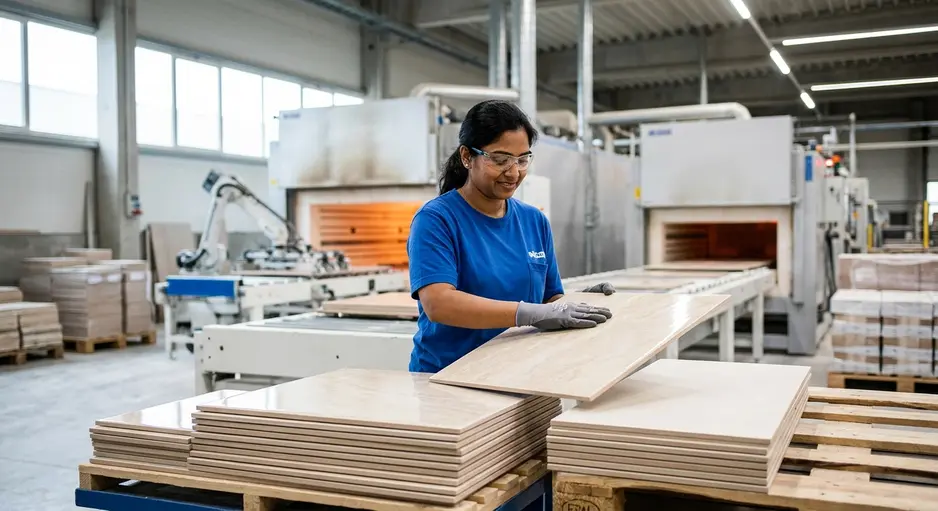
Manufacturers are increasingly choosing sustainable ball clay for ceramic tiles sourced through responsible mining practices.
Efficient mining and reduced waste are becoming key considerations for buyers.
Advanced formulations now use optimized blends to improve performance while reducing costs.
As tile sizes grow, the demand for high-performance ball clay with stable properties will continue to rise.
Buy High-Quality Ball Clay for Tile Manufacturing
Selecting the right ball clay for ceramic tiles manufacturing requires a clear understanding of technical properties, sourcing reliability, and cost factors. From plasticity and particle size to supplier consistency and logistics, every detail impacts final tile quality.
Working with a trusted supplier ensures stable production and fewer defects. Companies like Jay Ganesh Minerals provide consistent quality, technical support, and reliable supply for ceramic manufacturers looking to scale efficiently.
It improves plasticity, binding, and strength during tile formation and drying.
Neither is better alone. A combination delivers optimal results.
Focus on plasticity, LOI, particle size, and chemical composition to match your formulation needs.
Shipping time, packaging, moisture control, and port handling are critical.
Yes, many suppliers offer customized blends to meet specific manufacturing requirements.
It increases green strength but must be balanced to control shrinkage during firing.
Prices vary widely depending on quality and logistics but remain competitive in India.

Whatsapp Chatx
Hi! Click one of our representatives below to chat on WhatsApp or send us email to jrt@jayganeshminerals.com

|
Mr. RAJESH +91 99130 87000 |
|
|
Mr. JIGNESH +91 89800 70055 |