


Global Industrial Mineral Trends in 2026
02 July, 2026

09 April, 2026
In industries ranging from ceramics to paints, minerals are the backbone of high-quality production. However, maintaining grade consistency in mineral supplies is a challenge that many manufacturers face. Variations in mineral quality can disrupt production processes, affect product performance, and lead to increased costs. This is why sourcing from reliable mineral suppliers is crucial for any business that depends on industrial minerals like kaolin, ball clay, or zirconium silicate.
In this blog, we explore how trustworthy suppliers ensure that every batch of mineral delivered meets precise standards, keeping your manufacturing processes smooth and predictable.
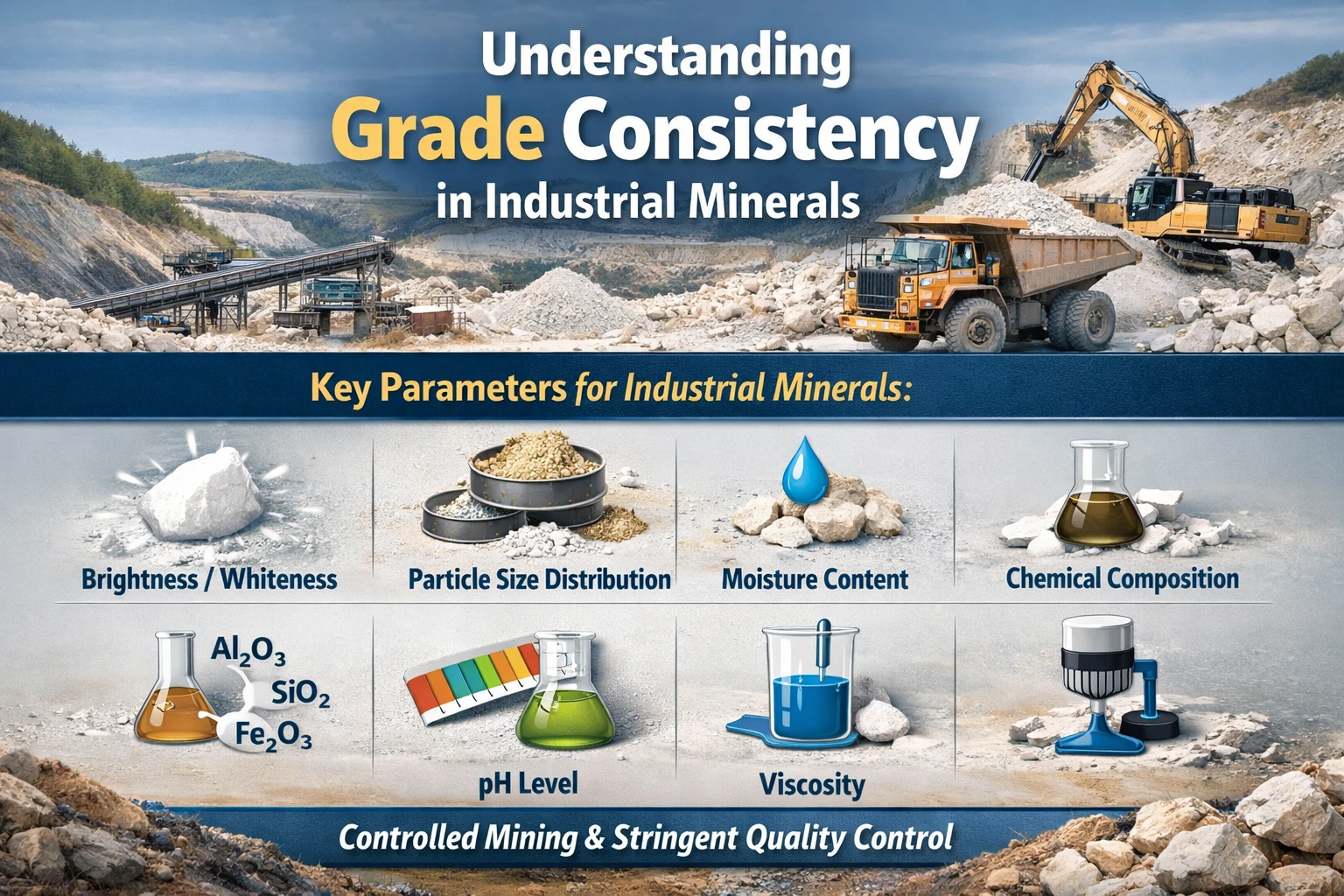
Grade consistency is the ability of a mineral supplier to deliver material meeting identical specifications across every shipment, batch, and season.
Key parameters for industrial mineral grades include:
Natural mineral deposits are inherently variable due to geology, seasonal weather, and mining depth. Reliable mineral suppliers bridge this variability through controlled mining, precise processing, and stringent quality management, ensuring that every batch meets industrial requirements.
The first step in grade consistency is sourcing minerals from proven deposits. Suppliers like Jay Ganesh Minerals carefully select mines known for stable composition and minimal variability. Minerals such as kaolin clay or white clay from well-characterized deposits naturally exhibit consistent properties, reducing the need for excessive processing later.
Even high-quality raw minerals need processing to meet industry specifications. Trusted suppliers implement standardized processing steps, including:
By adhering to strict processing protocols, suppliers ensure that each batch aligns with the required grade.
Grade consistency is impossible without a rigorous quality control (QC) system. Reliable mineral suppliers employ multi-level QC measures:
Modern suppliers also use advanced instruments like X-ray fluorescence (XRF) analyzers and laser particle size analyzers for precise results.
When raw minerals show slight variations, blending is a key step to maintain uniformity. Homogenization involves mixing different lots to create a consistent final product. For minerals like semi-plastic clay or WBC clay, this step ensures that industrial clients receive the same performance properties every time.
Reliable suppliers maintain detailed documentation for each batch, including:
This traceability allows manufacturers to track the origin and quality of minerals, ensuring accountability and facilitating compliance with industry standards.
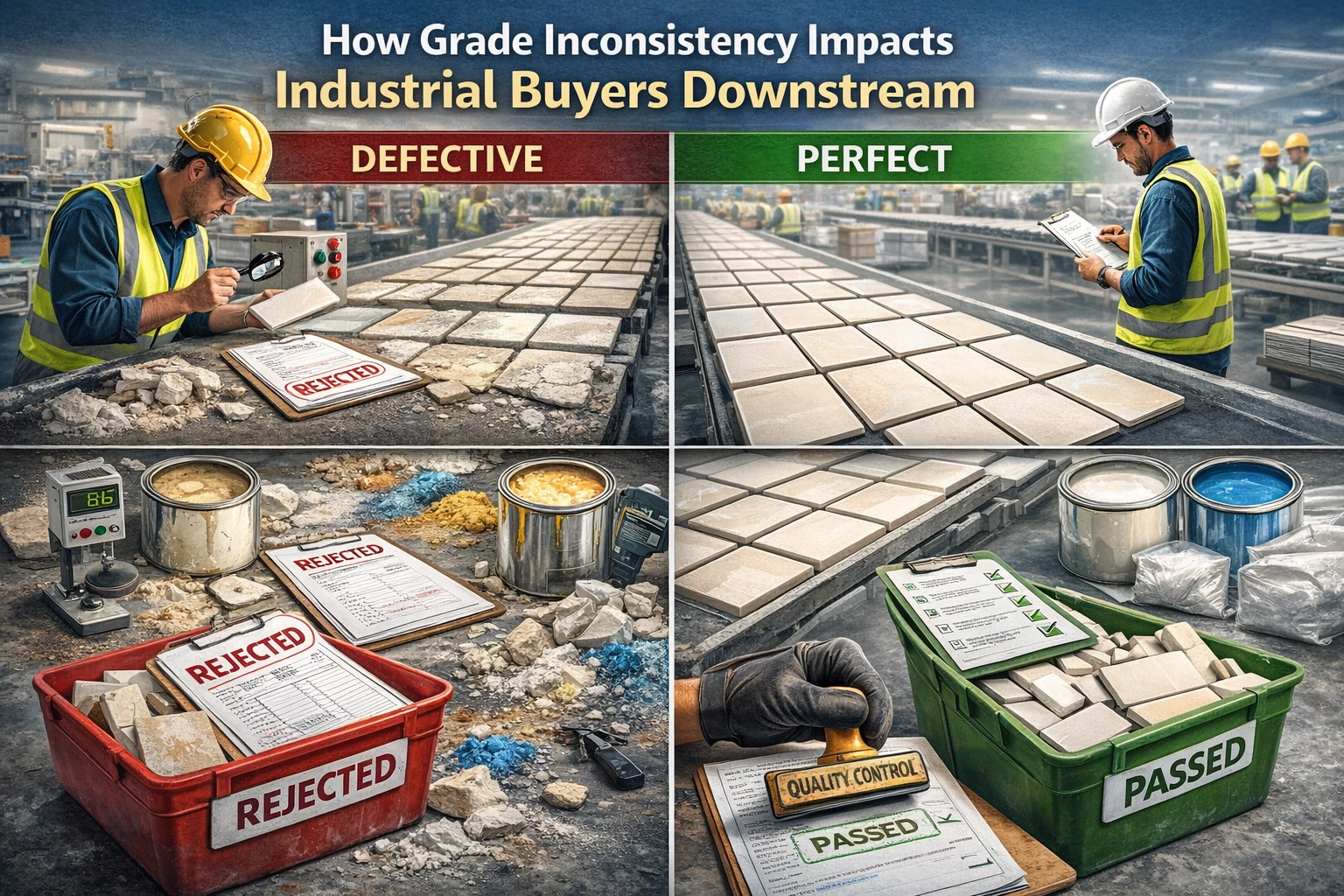
Receiving off-spec mineral batches can disrupt production:
Hidden costs include downtime, wastage, customer complaints, and rework. The cheapest supplier often becomes the costliest when grade inconsistency is considered. Long-term partnerships with reliable mineral suppliers reduce total procurement costs beyond unit price.
Not all suppliers offer the same level of consistency. When evaluating suppliers, look for these qualities:
By selecting a trusted supplier, you protect your manufacturing processes and guarantee product quality.
Maintaining mineral grade consistency offers several advantages:
For industries like ceramics, paint, rubber, and paper, these benefits translate into both cost savings and market competitiveness.
Grade consistency in minerals is not accidental; it is the result of careful sourcing, standardized processing, rigorous quality control, and precise documentation. Reliable mineral suppliers, such as Jay Ganesh Minerals, implement these measures to ensure that industrial clients receive high-quality, consistent materials for every batch.
Whether it’s kaolin clay, ball clay, semi-plastic clay, or zirconium silicate, partnering with a supplier who prioritizes grade consistency safeguards your production quality and strengthens your business outcomes.
Suppliers perform chemical analysis at multiple stages, removing impurities through screening, washing, and chemical treatment when necessary. This ensures that the mineral meets the grade requirements for specific applications.
Absolutely. Using consistent minerals prevents variations in texture, color, and performance in end products, reducing defects and increasing efficiency.
Advanced technologies like laser diffraction for particle size, XRF for chemical composition, and automated blending systems help suppliers maintain strict grade standards, minimizing human error.

Whatsapp Chatx
Hi! Click one of our representatives below to chat on WhatsApp or send us email to jrt@jayganeshminerals.com

|
Mr. RAJESH +91 99130 87000 |
|
|
Mr. JIGNESH +91 89800 70055 |