
Indonesian Coal Grades Explained and Their Applications
06 August, 2026

02 July, 2026
Importing industrial coal for ceramic tile production is not just about price or availability. The real value lies in quality. If the coal does not meet the right standards, it can disrupt kiln performance, increase fuel costs, and even lead to defective tiles. That’s why understanding how to test industrial coal quality before import is essential for every buyer in the ceramic industry.
This guide breaks down the key tests, methods, and checks you should follow before making a bulk purchase. It also reflects real-world practices used by experienced importers and manufacturers.
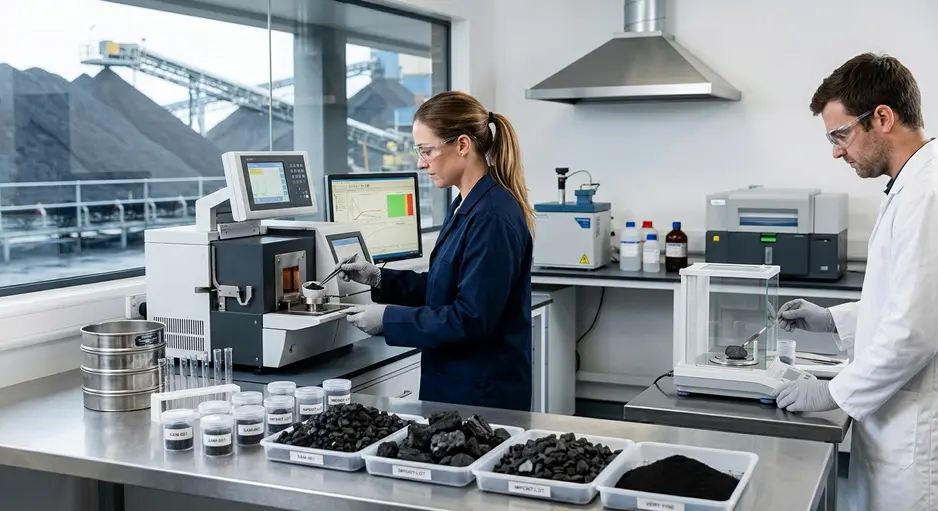
Coal quality directly impacts kiln efficiency and final product quality. Even small variations in ash or moisture can change firing behavior.
In bulk coal purchase for ceramic tile factories (B2B), these issues quickly turn into significant cost losses.
A common example in tile manufacturing is when high ash coal leads to uneven firing. This results in color variations and weak tile strength, forcing manufacturers to discard entire batches.
There are also compliance risks. Many countries require strict adherence to industrial coal import regulations and certificates. Without proper testing, shipments can be delayed or rejected.
Understanding coal types helps in selecting the right fuel for kiln operations.
For tile kilns, thermal coal is the better option. It offers stable combustion and consistent heat output, which is essential for uniform tile firing.
Coal can be supplied in washed or raw form.
Most tile manufacturers prefer washed coal because it reduces maintenance and improves product quality. However, some buyers still choose raw coal when cost is a primary concern and blending is possible.
Proximate analysis is the first and most important test in coal evaluation. It measures:
This analysis gives a quick overview of coal quality. It is widely used in laboratory analysis for coal importers and helps buyers compare different suppliers.
The calorific value tells you how much energy the coal can produce.
In ceramic tile manufacturing, coal with higher calorific value reduces consumption and improves efficiency.
Before finalizing a supplier, always measure calorific value before coal purchase to ensure it meets kiln requirements.
Ash is the non-combustible residue left after burning coal.
Using low-ash coal helps improve kiln efficiency with low-ash coal and ensures smoother operations.
Sulfur and moisture are critical for both environmental and operational reasons.
Knowing how to check moisture and sulfur in coal before import helps prevent long-term production issues.
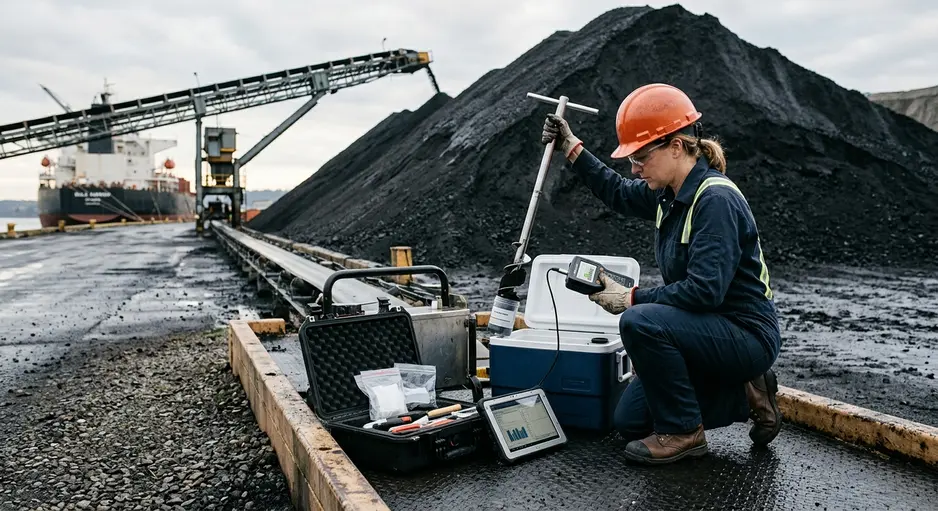
Coal testing generally involves two main approaches:
Both are part of standard coal testing methods proximate and ultimate analysis used globally.
Reliable testing follows recognized standards such as:
These ensure consistency and accuracy in test results, especially in international transactions.
Some buyers use on-site coal testing kits for buyers for quick checks.
Lab testing remains essential for final approval.
Accurate sampling is critical. Poor sampling leads to misleading results.
Independent inspection agencies help ensure transparency.
Many importers rely on third-party coal inspection services for exporters to secure their investment.
Before import, ensure all required documents are available:
Meeting coal quality certificate requirements for importers ensures smooth customs clearance.
Importers should look for certified labs with global testing standards. Choosing the best coal testing lab in India for importers ensures reliable results and better decision-making.
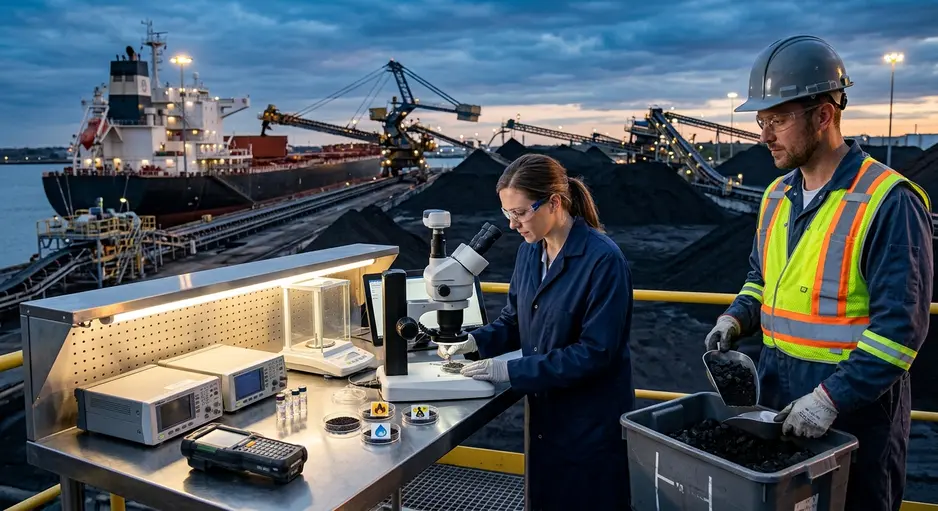
Coal quality plays a major role in tile output.
Proper testing helps reduce tile defects by testing coal quality before production begins.
A thermal coal quality test for tile kilns ensures compatibility with kiln design.
This includes checking combustion behavior, heat output, and ash residue.
Choosing the right fuel is critical.
Manufacturers often improve output by switching to better-quality coal. Trusted suppliers like those featured on Jay Ganesh Minerals provide consistent coal suitable for ceramic applications.
A dependable coal supplier for tile manufacturers export should offer:
Established suppliers such as those listed on Jay Ganesh Minerals help reduce sourcing risks.
When sourcing from China:
Similar care is needed when working with Vietnam coal suppliers for tile manufacturers.
Understanding how to test industrial coal quality before import is essential for any ceramic tile manufacturer or bulk buyer. From proximate analysis to calorific value testing, each step helps ensure the coal meets production needs.
Reliable testing, proper inspection, and working with trusted suppliers can prevent costly mistakes. By focusing on quality rather than just price, businesses can improve kiln efficiency, reduce defects, and maintain consistent production.
In a competitive industry, the right coal choice backed by proper testing is not just a technical decision—it’s a strategic advantage.
Use proximate analysis, calorific value testing, ash measurement, and sulfur/moisture checks. Combine lab testing with third-party inspection for accurate results.
Most ceramic kilns perform well with medium to high calorific value coal, typically above 4000 kcal/kg, depending on kiln design.
Washed coal is generally better due to lower ash and sulfur content, leading to cleaner combustion and improved tile quality.
Key documents include quality analysis reports, certificate of origin, and compliance certificates based on import regulations.
These are measured through laboratory testing using standardized methods under ISO or ASTM guidelines.
It is a basic test that measures moisture, ash, volatile matter, and fixed carbon to evaluate coal quality.
Yes, it can lead to defects like cracks, uneven color, and reduced strength due to inconsistent kiln performance.

Whatsapp Chatx
Hi! Click one of our representatives below to chat on WhatsApp or send us email to jrt@jayganeshminerals.com

|
Mr. RAJESH +91 99130 87000 |
|
|
Mr. JIGNESH +91 89800 70055 |