

Indonesian Coal Grades Explained and Their Applications
06 August, 2026

02 July, 2026
Industrial white clay plays a key role in ceramics, tiles, and several manufacturing processes. From porcelain tiles to glaze formulation, the right grade can change product quality, color, and strength. But with many white clay grades available, choosing the right one can feel confusing.
This guide breaks down everything you need to know about white clay grades, properties, and uses, along with practical tips for buying in bulk. Whether you are a tile manufacturer or sourcing raw materials, this will help you make better decisions.
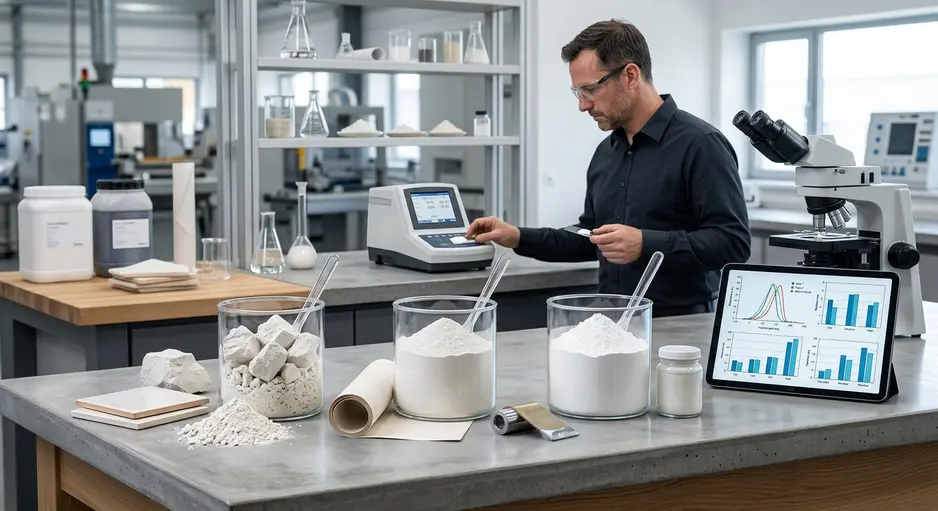
Industrial white clay, often called kaolin or china clay, is mainly composed of kaolinite. This mineral gives the clay its fine texture, chemical stability, and bright color. High kaolinite content usually indicates better quality for ceramic applications.
The performance of white clay depends on several key factors:
Kaolin and china clay are often used interchangeably. Both are low-plasticity clays with high whiteness. Ball clay, on the other hand, is more plastic but less white. It is often blended with kaolin in ceramic tile body raw materials to improve workability.
White clay ensures brightness, smooth texture, and structural strength. It is widely used in porcelain body formulations and tile manufacturing because it improves both visual appeal and mechanical performance.
Raw kaolin is directly mined and may contain impurities. Processed grades undergo washing, refining, and classification to improve purity and consistency. Most industrial applications prefer processed white clay grades.
Calcined kaolin is heat-treated to remove moisture and enhance brightness.
Key benefits include:
Metakaolin is produced by controlled calcination. It is widely used in ceramics and construction due to its high reactivity and strength-enhancing properties.
This grade is specially processed for applications where brightness matters. It is ideal for high whiteness kaolin for tiles and premium sanitaryware.
Refractory grades can withstand extreme heat without deformation. These are used in kilns, furnaces, and other high-temperature environments.
Different grades are defined by chemical and physical properties:
A higher whiteness index leads to brighter tiles and cleaner glaze finishes. This is crucial for premium ceramic products.
Fine particles create smoother surfaces and better coating performance. This directly affects glaze quality and consistency.
Plasticity helps shape the material, while controlled shrinkage prevents cracks during firing. Both must be balanced for optimal results.
Iron and titanium impurities can reduce brightness and cause discoloration. High-quality industrial white clay has minimal impurities.
Always review the technical data sheet. Key parameters include:
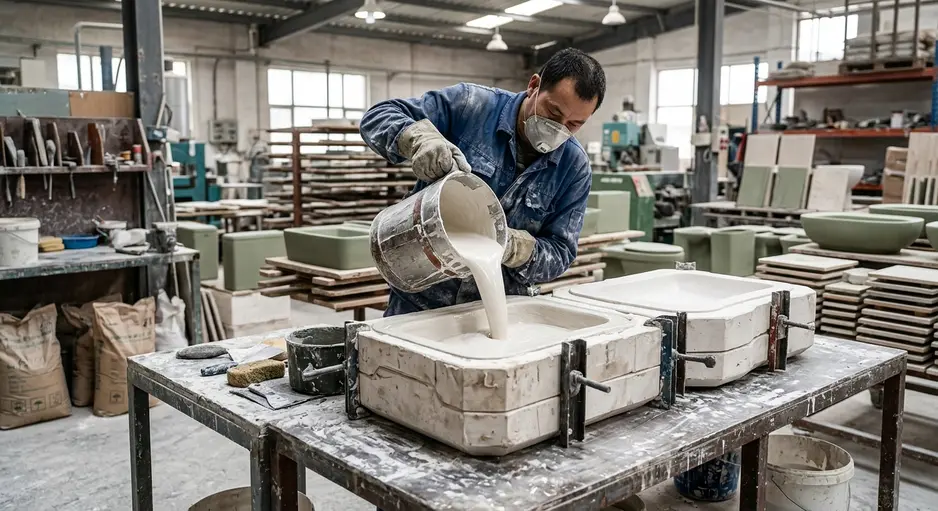
White clay improves glaze opacity and ensures a smooth finish. It is widely used in white clay for ceramic glaze formulation.
In tile manufacturing, white clay provides structure, brightness, and durability. It is a key ingredient in white clay powder for tile body formulation.
Sanitaryware requires high strength and whiteness. Specialized grades are used for white clay for sanitaryware and tableware production.
Powdered forms allow better mixing and consistency, which improves production efficiency.
Beyond ceramics, white clay is used as a filler and functional material in coatings, rubber products, and paper manufacturing.
Many manufacturers blend multiple china clay grades to balance cost and performance. For example, combining high-whiteness kaolin with more plastic clay can improve both finish and workability.
Porcelain tiles require high whiteness and low iron content. Look for refined grades with consistent particle size.
Always test samples in your own production setup. Lab validation ensures compatibility with your formulations.
Lower-cost materials may reduce quality. A balanced approach ensures long-term savings and consistent output.
India and China are major sources. Indian suppliers are known for consistent quality and reliable export processes, while Chinese suppliers often offer competitive pricing.
Exporting requires proper documentation, including quality certificates and compliance with import standards.
Choose suppliers with proven experience in ceramics and the ability to deliver uniform batches.
Pricing depends on grade, purity, and order volume. Minimum order quantities vary by supplier.
Established suppliers such as Jay Ganesh Minerals provide consistent industrial-grade materials, making them a reliable option for bulk sourcing.
These values define the performance of white clay in industrial applications. High Al2O3 and low Fe2O3 are preferred.
Physical characteristics impact processing efficiency and final product quality.
Calcined kaolin offers higher brightness and stability, while hydrous kaolin provides better plasticity.
Focus on key metrics like particle size, brightness, and chemical composition to match your application needs.
Quality benchmarks vary by application, but consistency and purity remain critical across all uses.
Selecting the right white clay grades depends on your application, quality requirements, and budget. Focus on key factors like whiteness, particle size, and chemical purity. Always test samples and review technical data before committing to bulk orders.
Reliable suppliers play a crucial role in ensuring consistent quality and supply. For businesses looking to scale production, working with experienced exporters like Jay Ganesh Minerals can help maintain both performance and cost efficiency.
Final tip: Never skip lab validation. The right testing upfront can save significant time and cost in production.
A higher kaolinite content is preferred for better whiteness and performance.
White clay grades include raw kaolin, washed kaolin, calcined kaolin, metakaolin, and refractory grades, each suited for different applications.
Higher iron levels reduce brightness and can cause discoloration.
Yes, suppliers often offer tailored grades based on application needs.
It varies by supplier but is usually based on bulk shipment requirements.
Request samples, technical data sheets, and conduct lab testing.
Both have advantages, but supplier consistency and quality control matter more than origin.
Metakaolin is used in ceramics and construction for improved strength and durability.

Whatsapp Chatx
Hi! Click one of our representatives below to chat on WhatsApp or send us email to jrt@jayganeshminerals.com

|
Mr. RAJESH +91 99130 87000 |
|
|
Mr. JIGNESH +91 89800 70055 |