
Indonesian Coal Grades Explained and Their Applications
06 August, 2026

01 January, 2026
Clay has always been the backbone of the ceramic industry, shaping everything from tiles and sanitaryware to pottery and tableware. The type of clay used directly impacts product strength, durability, surface finish, and overall performance. That’s why choosing the right clay is essential for ceramic manufacturers who aim to maintain quality and consistency.
Today, the two most commonly used options are natural clay and processed clay. While natural clay is sourced directly from the earth with minimal refinement, processed clay undergoes multiple purification and blending stages to improve quality. This blog compares both types in terms of performance, applications, cost, and suitability for various ceramic products.
Clay is a naturally occurring earthy material composed mainly of fine-grained minerals. In the ceramic sector, clay acts as a binder, shaping agent, and structural foundation during firing. Without the right ceramic clay, it is nearly impossible to achieve the desired strength, density, or finish in final products.
Helps shape ceramic products
Provides plasticity during molding
Hardens upon firing
Influences color, surface feel, and glazing behavior
From tiles and sanitaryware to pots, decorative items, and vitrified products, almost all ceramic goods depend on the properties of clay. Even slight variations in mineral composition or moisture levels can affect durability, heating stability, and shrinkage. This makes understanding clay characteristics essential for producing high-quality ceramics.
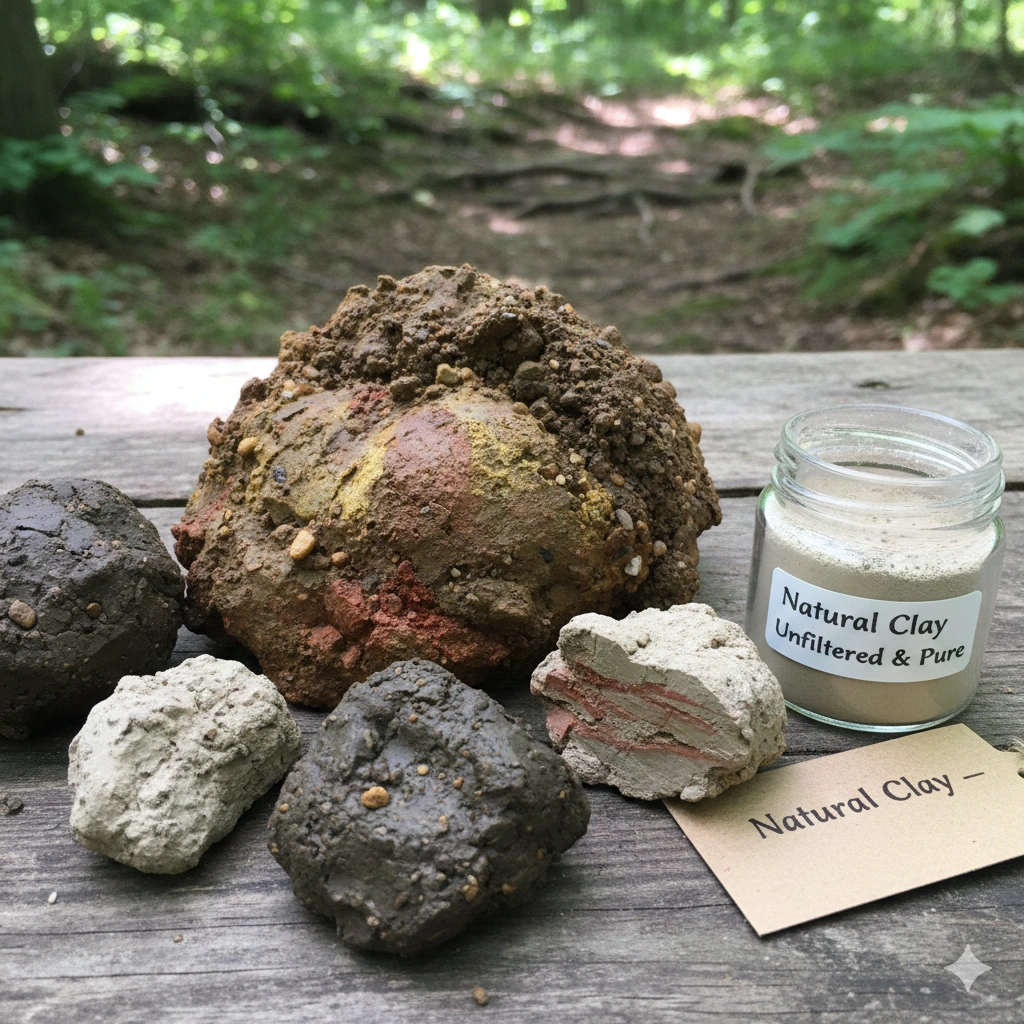
Natural clay is clay extracted directly from the earth with minimal mechanical or chemical processing. It forms naturally over millions of years from weathered rocks and mineral deposits.
Natural clay is typically obtained from open-pit mining areas rich in minerals such as kaolinite, quartz, and feldspar. Once extracted, the clay is sun-dried, crushed, and sieved to remove large stones or debris.
Natural clay contains:Silica, Alumina, Iron oxides, Organic matter, Trace minerals
The mineral balance varies significantly depending on the region, giving rise to different types of natural clay, such as: Kaolin clay, Ball clay, Fire clay, Earthenware clay
This variability makes natural clay ideal for natural clay for pottery, handmade ceramics, and traditional craftsmanship.
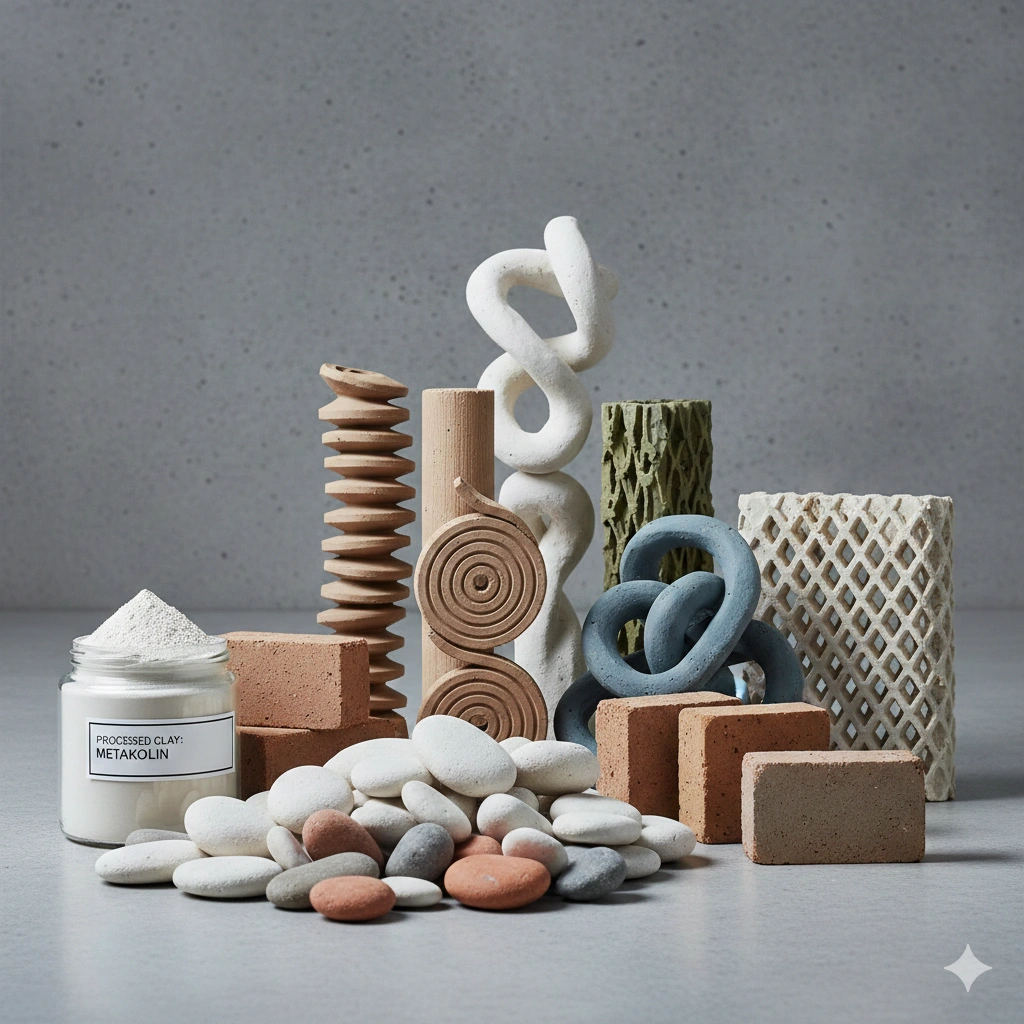
Processed clay is natural clay that undergoes refinement to improve purity, consistency, and performance. Ceramic factories depend on processed clay when uniformity and high mechanical strength are required.
To convert natural clay into processed clay, manufacturers follow systematic procedures:
Washing to remove dirt and soluble minerals
Filtering to eliminate coarse particles
Grinding for improved fineness
Blending with selected minerals for targeted properties
Quality testing to maintain consistency
Processed clay offers a stable and predictable performance, making it the preferred choice for large-scale ceramic production.
Composition: Natural clay contains naturally occurring impurities, while processed clay has controlled mineral content, resulting in more uniform performance.
Consistency: Natural clay varies depending on its geographic source. Processed clay remains consistent across batches due to precise refining.
Workability: Processed clay generally offers better workability, molding, and shaping. Natural clay may require blending before use.
Firing Behavior: Natural clay may shrink unpredictably and cause cracks. Processed clay provides stable shrinkage rates, better strength, and improved thermal behavior.
Environmental Impact: Natural clay has a lower processing footprint, but large-scale mining affects land. Processed clay uses more energy but reduces product waste due to fewer defects.
| Parameter | Natural Clay | Processed Clay |
|---|---|---|
| Origin | Directly sourced from natural deposits | Natural clay refined and blended |
| Purity | Contains impurities, organic matter, iron, etc. | High purity due to refining |
| Consistency | Varies between batches | Uniform and controlled |
| Plasticity | Good but may fluctuate | Superior, engineered for molding |
| Workability | Requires preparation | Ready-to-use with minimal adjustments |
| Firing Behavior | Unpredictable shrinkage | Stable shrinkage and firing results |
| Durability | Moderate strength | High strength and density |
| Color / Whiteness | Depends on natural mineral content | Enhanced whiteness possible |
| Cost | Low cost | Higher due to processing |
| Best Applications | Pottery, handicrafts, small-scale ceramics | Tiles, sanitaryware, advanced ceramics |
| Environmental Impact | Low processing energy, high mining impact | Higher processing energy, less production waste |
| Suitability for Automation | Limited | Excellent |
When it comes to industrial ceramic production, performance is crucial.
Strength & Durability: Processed clay delivers superior strength, especially for tiles and sanitaryware.
Surface Finish: Natural clay may produce earthy textures, while processed clay ensures smoother and more refined surfaces.
Glaze Adhesion: Processed clay provides consistent glaze bonding due to controlled mineral levels.
Defect Rates: Natural clay may lead to cracks or warping. Processed clay significantly reduces rejection rates.
Natural clay is suitable for:
Traditional pottery and handicrafts
Terracotta items
Rural and artisanal ceramic units
Low-cost ceramic products
Applications where natural variations are acceptable
Its affordability and accessibility make natural clay a preferred choice for ceramic raw materials used in craft-based production.
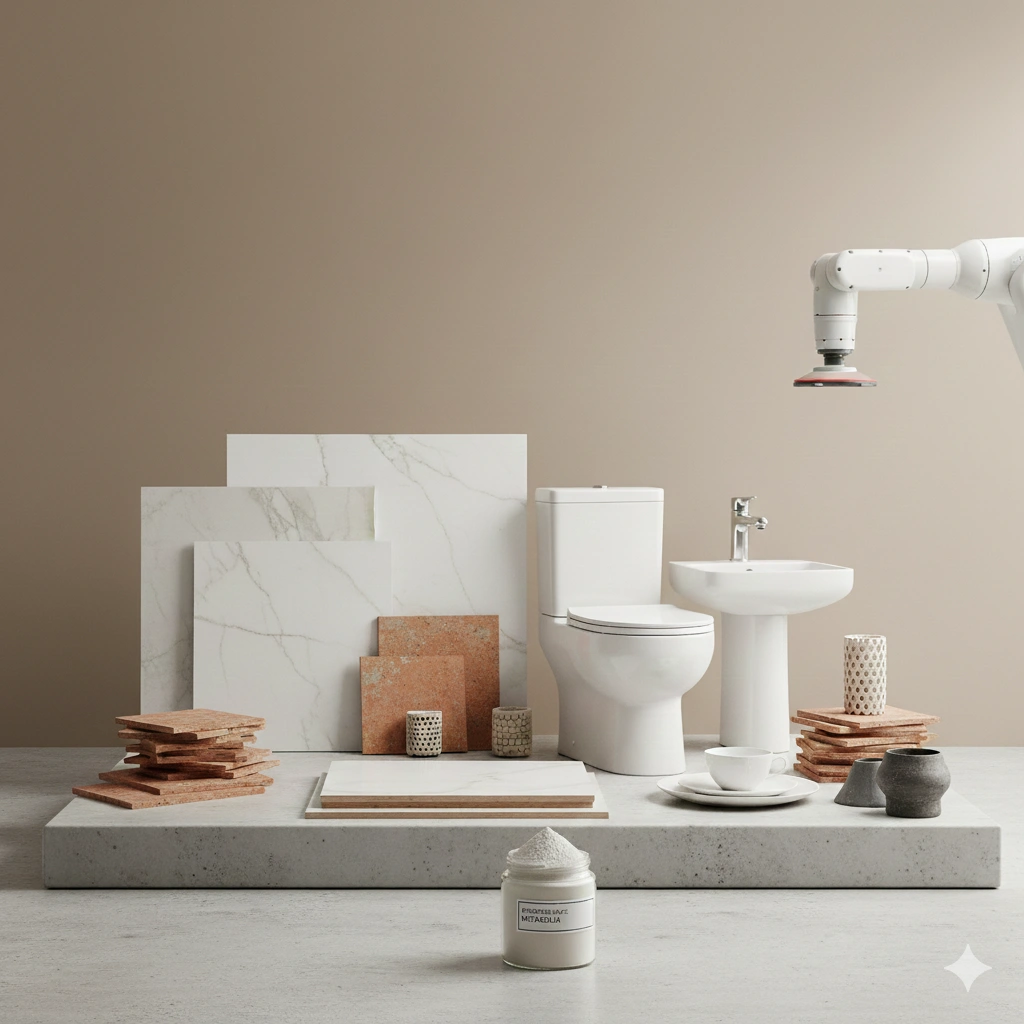
Processed clay is widely used in:
Ceramic tiles and vitrified tiles
Sanitaryware and bathroom fixtures
Tableware, crockery, and premium ceramics
High-volume automated manufacturing
Advanced ceramics with strict performance requirements
For any ceramic factory aiming for consistent results, processed clay is essential.
Raw Material Cost: Natural clay is more affordable due to minimal processing.
Handling & Processing Costs: Processed clay is pricier because of refining, blending, and testing.
Production Efficiency: Processed clay saves long-term costs by reducing defects, waste, and downtime.
Rejection Rate: Lower with processed clay making it more cost-effective in large-scale manufacturing.
Choosing processed clay may seem expensive upfront but provides significant long-term economic benefits.
Mining can disturb landscapes but requires less energy.
Processed clay production consumes more water and electricity but reduces product waste later.
Processed clay leads to fewer product defects, lowering waste disposal needs.
Sustainable mining practices and responsible sourcing help reduce impacts for both clay types.
Both natural and processed clay can be environmentally responsible when sourced from reputable suppliers.
Natural clay: Best for pottery, handicrafts, and small-scale production
Processed clay: Best for tiles, sanitaryware, advanced ceramics, and mass production
Product quality needs
Budget
Scale of manufacturing
Type of ceramics being produced
Overall, processed clay offers better strength, consistency, and long-term reliability for industrial use.
A dependable supplier ensures consistent quality and reliable delivery. Key factors include:
Mineral quality certifications
Testing and quality control standards
Ability to supply different types of clay for ceramics
Technical support for material selection
Proven track record with ceramic factories
Choosing a trusted supplier ensures stable production, reduced defects, and superior ceramic performance.
Strength and longevity
Color consistency and surface smoothness
Glaze performance
Crack resistance
Customer satisfaction
Premium industrial clay ultimately shapes the brand reputation of ceramic manufacturers in a competitive market.
Jay Ganesh Minerals is a leading supplier of ceramic raw materials, offering both natural clay and processed clay tailored to the needs of modern ceramic manufacturers.
Expertise in sourcing high-quality clay minerals
Strict quality testing and consistency controls
Reliable supply for tiles, sanitaryware, and ceramic factories
Customized clay solutions based on industry demand
Long-standing trust from ceramic producers across India
Their commitment to quality ensures better results, fewer defects, and superior performance for all types of ceramic applications.
Both natural clay and processed clay play vital roles in the ceramic industry. Natural clay offers affordability and aesthetic appeal for handcrafted ceramics, while processed clay delivers precision, consistency, and strength for industrial manufacturing.
Understanding the differences helps ceramic manufacturers choose the right raw material for their specific needs. As ceramic technology continues evolving, more advanced processing methods will further improve clay performance and sustainability.
Selecting the right clay and the right supplier remains a key factor for success in today’s ceramic market.
Natural clay contains naturally occurring minerals and impurities, while processed clay is refined for higher purity and consistency.
Yes, processed clay provides better strength, uniformity, and firing behavior, making it ideal for ceramic and vitrified tiles.
It can be used, but natural clay may require blending or purification before meeting industrial standards.
Processed clay provides more stable firing results and lower shrinkage risk.
Yes, processed clay significantly reduces cracking, warping, and rejection rates.

Whatsapp Chatx
Hi! Click one of our representatives below to chat on WhatsApp or send us email to jrt@jayganeshminerals.com

|
Mr. RAJESH +91 99130 87000 |
|
|
Mr. JIGNESH +91 89800 70055 |