

Global Industrial Mineral Trends in 2026
02 July, 2026

02 February, 2026
Clay has been one of the most essential raw materials for centuries, playing a critical role in industries such as ceramics, tiles, pottery, sanitaryware, and decorative products. However, not all clay types are the same. Choosing the right clay can significantly impact product quality, appearance, durability, and cost. Two commonly used clay types are WBC Clay and white clay, each offering distinct characteristics and advantages.
This blog provides a detailed comparison of white clay vs WBC Clay, explaining their composition, properties, and best applications. Whether you are a manufacturer, ceramic artist, or industry professional, understanding these differences will help you choose the most suitable clay for ceramics and other applications.
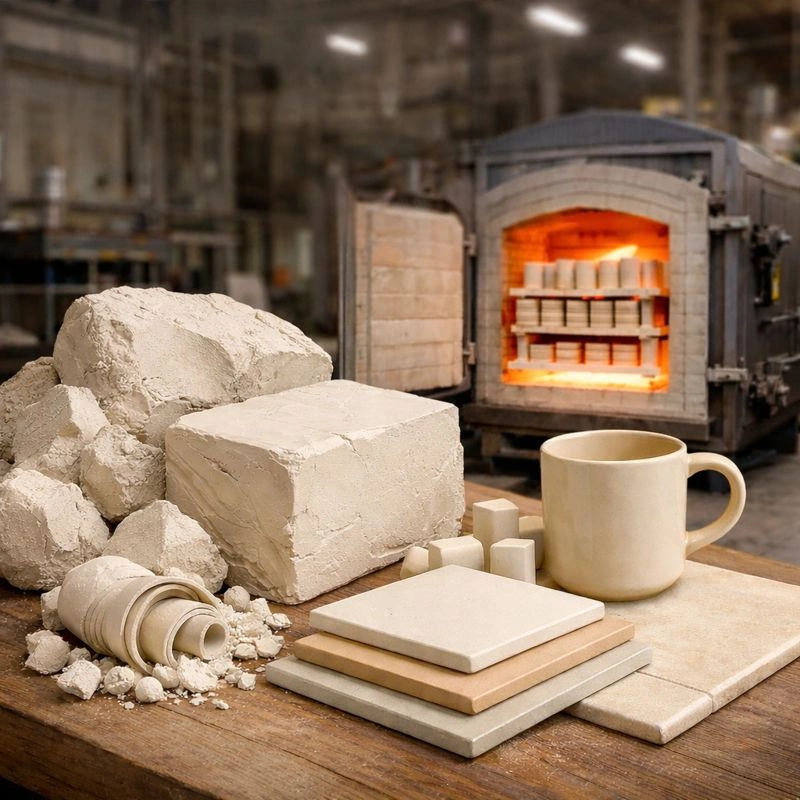
WBC Clay is a widely used industrial clay known for its balanced properties, strength, and cost-effectiveness. It is commonly used in large-scale ceramic and tile manufacturing due to its excellent workability and consistent performance during firing.
WBC Clay typically has a slightly off-white or light cream color before firing. Its natural mineral composition includes a controlled amount of iron and other elements that enhance strength and plasticity. This makes WBC Clay easy to shape, mold, and process in automated production environments.
One of the main advantages of WBC Clay is its ability to withstand higher firing temperatures without excessive deformation. After firing, it produces a stable structure with good mechanical strength, making it ideal for products that require durability rather than a perfectly white finish.
Ceramic wall and floor tile manufacturing
Sanitaryware production
Structural ceramics
Industrial ceramic components
Because of its availability and affordability, WBC Clay is often preferred for bulk manufacturing where performance consistency and cost control are priorities.
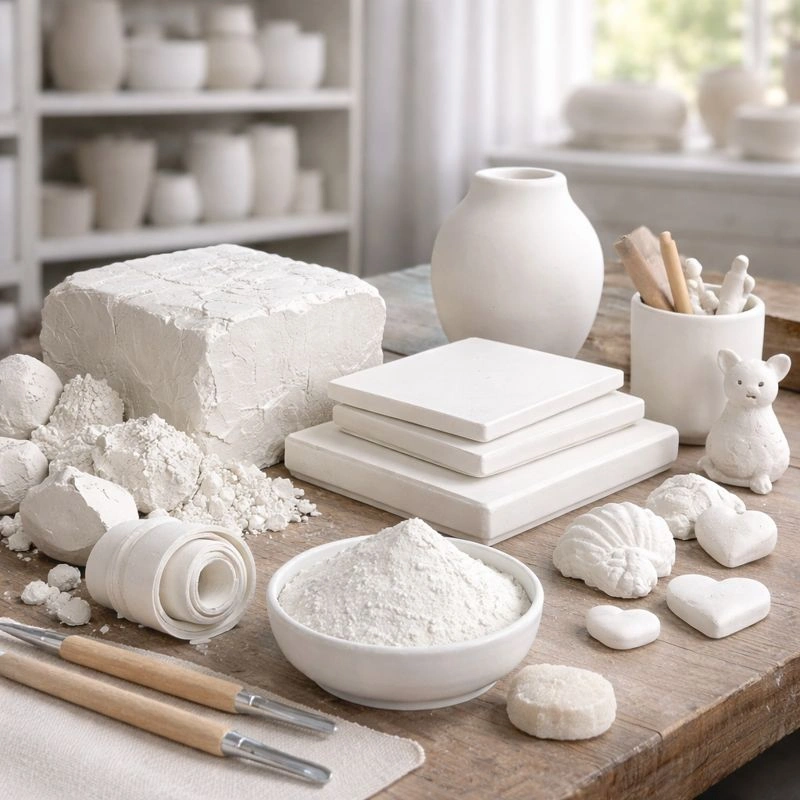
White clay refers to a group of naturally light-colored clays known for their purity and smooth texture. When people ask what is white clay, they are often referring to clays such as kaolin or refined white firing clay, which contain very low levels of iron and impurities.
White clay is valued for its bright appearance, fine particle size, and excellent surface finish. When fired, white firing clay retains its light color, making it ideal for products where aesthetics are critical.
In addition to industrial uses, white clay is also popular in creative and hobby applications. Variants such as white air dry clay and white modeling clay are commonly used for craft, educational, and decorative purposes due to their ease of handling and smooth finish.
High brightness and color consistency
Smooth texture and fine grains
Lower plasticity compared to WBC Clay
Excellent surface quality after firing
Due to its refined nature, white clay is generally more expensive but offers superior visual appeal, especially for premium ceramic products.
Understanding the differences between WBC Clay and white clay helps manufacturers and designers select the right material for their needs. Below are the key comparison points:
White clay naturally has a brighter and cleaner appearance compared to WBC Clay. This makes it ideal for products where surface color matters. WBC Clay, while lighter than many traditional clays, does not achieve the same level of whiteness after firing.
White clay has lower impurity levels, particularly iron content, which contributes to its white color. WBC Clay contains controlled mineral impurities that improve strength and workability but slightly reduce color brightness.
WBC Clay offers better plasticity, making it easier to mold and shape, especially in machine-driven processes. White clay is smoother but can be less forgiving during shaping and may require careful handling.
Products made from WBC Clay tend to have higher mechanical strength, making them suitable for heavy-duty applications. White clay products are strong but focus more on finish than structural robustness.
White firing clay maintains its brightness after firing, while WBC Clay develops a light cream tone. WBC Clay also shows less warping and cracking during high-temperature firing.
WBC Clay is more affordable and widely available, making it ideal for mass production. White clay is more expensive due to refinement and purity requirements.
| Parameter | WBC Clay | White Clay |
|---|---|---|
| Color After Firing | Off-white | Bright white |
| Plasticity | High | Moderate |
| Strength | High | Medium |
| Main Use | Structural ceramics | Decorative & surface use |
| Ceramic Suitability | Excellent | Good |
| Artistic Forms | Limited | White air dry clay, white modeling clay |
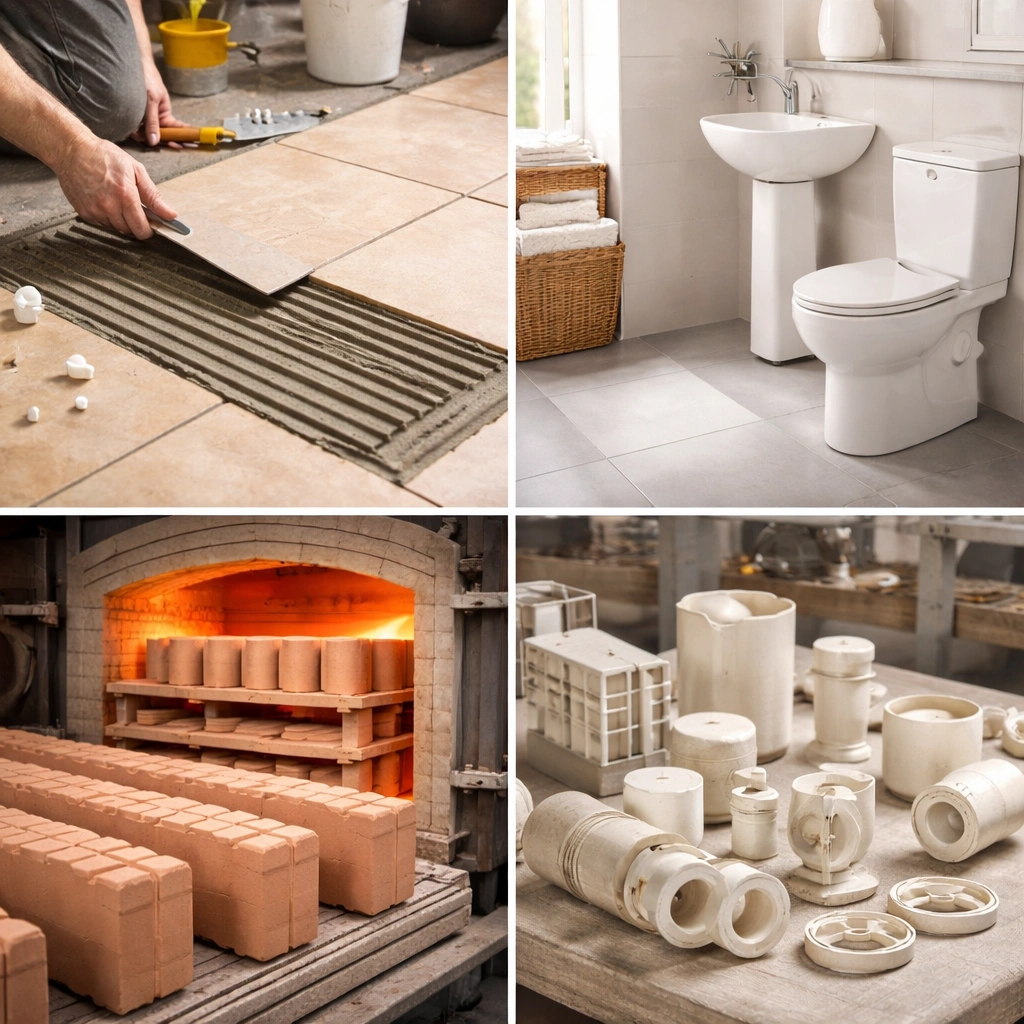
WBC Clay is best suited for applications where strength, stability, and cost-efficiency are more important than pure whiteness. Common white clay uses may focus on aesthetics, but WBC Clay dominates functional applications.
Typical uses include:
Ceramic floor and wall tiles
Sanitaryware products like washbasins and toilet components
Bricks and structural ceramics
Industrial ceramic parts
Manufacturers prefer WBC Clay when producing large volumes of ceramic products that require consistent quality and durability. Its excellent plasticity also reduces production waste and improves efficiency.
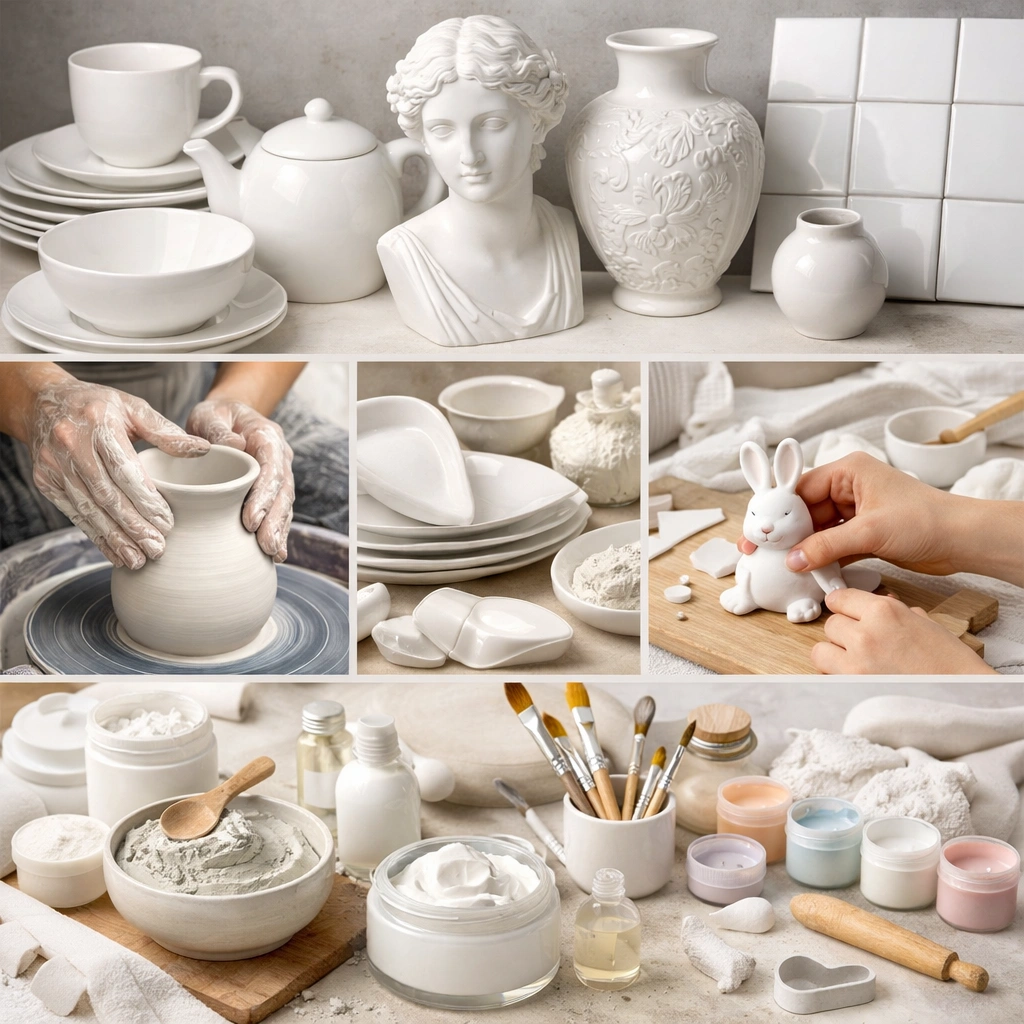
White clay is ideal for applications where appearance and surface finish play a major role. Thanks to its smooth texture and bright color, it is commonly used in high-end and decorative products.
Popular white clay uses include:
Tableware and crockery
Decorative pottery and sculptures
Porcelain tiles and premium ceramics
Craft and hobby products such as white air dry clay and white modeling clay
White clay is also used in non-ceramic industries such as cosmetics and pharmaceuticals due to its purity. For artists and designers, white clay provides a clean canvas that enhances glaze colors and surface details.
High plasticity and binding strength
Excellent workability for complex shapes
Improves ceramic body durability
Reliable firing performance
Slightly lower brightness compared to white clay
Requires proper blending for color-sensitive products
WBC Clay is ideal for performance-driven applications rather than decorative finishes.
Bright, clean firing color
Smooth surface texture
Versatile across multiple industries
Available in artistic forms like white modeling clay
Lower plasticity compared to WBC Clay
May require additives for strength
White clay is best suited for products where visual quality and finish are the main priorities.
Choosing between WBC Clay and white clay depends on your application, budget, and production goals. If you require high strength, excellent workability, and cost-effective production, WBC Clay is the better choice. It performs well in industrial environments and large-scale ceramic manufacturing.
On the other hand, if your priority is aesthetics, smoothness, and bright color, white clay is the ideal option. It is particularly suitable for decorative ceramics, premium tiles, and artistic applications.
Desired surface finish
Structural requirements
Production scale
Budget constraints
Understanding these factors ensures you select the most suitable material from the available clay types.
Consistency in clay quality directly impacts manufacturing efficiency. Variations in moisture, particle size, or impurities can cause defects and production losses.
High-quality WBC Clay and white clay ensure predictable results, stable firing behavior, and long-term reliability. Partnering with a trusted supplier helps maintain product standards and customer satisfaction.
Jay Ganesh Minerals specializes in supplying high-quality industrial clays tailored for ceramic and manufacturing industries. With controlled processing, consistent grading, and strict quality checks, the company ensures reliable performance across applications.
Their expertise in WBC Clay and white clay makes them a dependable partner for businesses seeking consistency, strength, and efficiency in production.
Both white clay and WBC Clay play essential roles in ceramic and industrial applications. While white clay excels in visual appeal and smooth finishes, WBC Clay offers strength, workability, and cost-efficiency. The best choice depends on how and where the clay will be used.
By understanding the differences between these clay types, manufacturers, designers, and artists can make informed decisions that balance performance, appearance, and budget. Choosing the right clay ultimately leads to better products, improved efficiency, and long-term success.

Whatsapp Chatx
Hi! Click one of our representatives below to chat on WhatsApp or send us email to jrt@jayganeshminerals.com

|
Mr. RAJESH +91 99130 87000 |
|
|
Mr. JIGNESH +91 89800 70055 |