Ball Clay Manufacturer for Tableware & Sanitaryware Industry
06 August, 2026

06 August, 2026
Indonesia is a major source of thermal coal for global energy and industrial markets. Buyers often identify Indonesian coal grades by their gross calorific value, such as GAR 4200, GAR 5000, or GAR 6000. These labels offer a useful starting point, but they do not tell the full story.
The best grade is not always the coal with the highest heat value. Moisture, ash, sulfur, sizing, and boiler design can all affect performance. This guide explains Indonesian coal specifications, common grade categories, and their use in power plants, cement kilns, industrial boilers, and brick kilns.
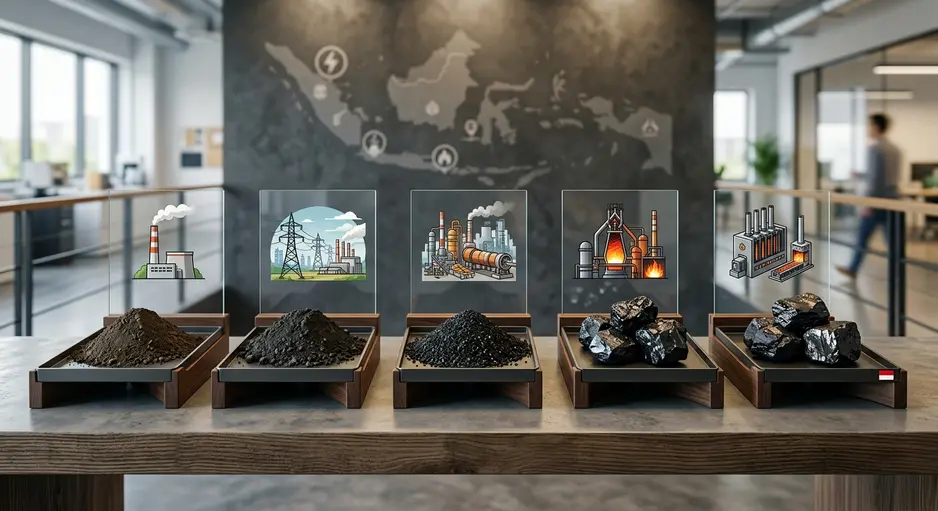
Most Indonesian thermal coal is traded according to calorific value. This value shows how much heat the fuel can release during combustion. However, buyers must also check the basis on which the result is reported.
Gross calorific value (GCV) measures the total heat released when coal burns, including heat recovered when water vapor condenses. It is commonly expressed in kilocalories per kilogram or megajoules per kilogram.
Net calorific value (NCV) deducts the heat carried away by water vapor. It is often a better guide to the usable energy available in an operating boiler or kiln. The difference between GCV and NCV becomes more important when the fuel has high moisture.
Commercial grade names are market shorthand rather than universal quality standards. Two shipments described as GAR 4200 may have different moisture, ash, sulfur, volatile matter, and particle size. The following categories are therefore indicative.
These lower-GCV products usually have high total moisture and lower usable heat per tonne. They may offer economical power generation fuel for plants designed to handle moist coal. Other uses can include mine-mouth generation, blending, and selected industrial systems.
GAR 4200 is a widely discussed category of Indonesian steam coal. It offers a practical balance between purchase cost and heat output. Common uses include utility power generation, industrial boiler fuel, and blending with higher-energy coal.
This medium-to-high grade offers better energy density than lower-GCV products. It can reduce the amount of fuel that must be transported, stored, and fed for the same heat requirement. Potential applications include utilities, cement plants, and industrial heating systems.
GAR 5500 coal provides a higher heat value and may reduce fuel volume per unit of energy. It is often considered for cement manufacturing fuel, utility blends, and industrial plants that need stable heat input.
These products may be marketed as premium Indonesian coal because of their high energy density. They can suit high-heat applications and premium blends. However, the word “premium” has little technical value unless it is supported by a current certificate of analysis.
Low-GCV coal can be cost-effective close to its source, while medium grades often balance price and combustion performance. High GCV Indonesian coal may improve freight and handling efficiency. The right choice depends on delivered cost per unit of usable heat.
Moisture content in coal affects both transport and combustion. Water adds weight but does not provide energy. It also consumes heat as it turns into vapor, which can lower flame temperature and boiler efficiency.
Ash is the non-combustible residue left after burning. Low ash coal can reduce handling, disposal, and equipment wear. In cement plants, ash may also enter the clinker, so its chemistry must be reviewed rather than treated only as waste.
Many Indonesian deposits are known for relatively low sulfur coal. This can support emissions control, but sulfur varies by mine and cargo. Buyers should never assume a shipment meets their limit without test results.
Volatile matter in coal affects ignition, flame formation, and combustion speed. Higher volatile content often helps a fuel ignite, although boiler conditions must still be suitable.
Fixed carbon analysis estimates the solid combustible material remaining after volatile compounds are released. Fixed carbon supports sustained burning. These two values should be assessed together and interpreted for the intended equipment.
A complete review of Indonesian coal quality may also include:
Sampling and testing should follow recognized ISO or ASTM methods. Independent inspection agencies can also supervise sampling, analysis, weighing, and loading.
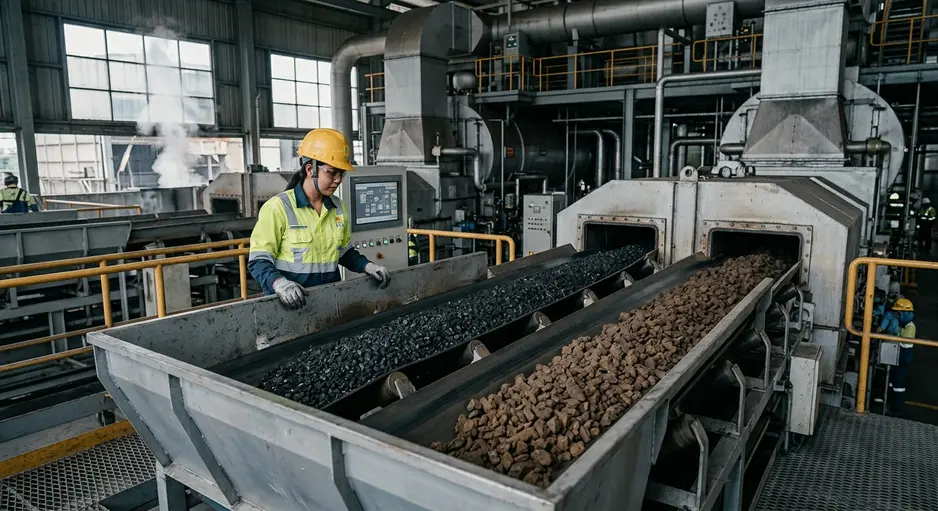
Lower- and medium-GCV coal is widely considered for power plants designed to burn higher-moisture fuel. Plant operators must review the boiler’s approved fuel range, NAR or NCV, mill capacity, total moisture, sulfur, ash behavior, and grindability.
A plant operating with GAR 4200 should not switch to GAR 5500 without a technical review. The change could affect coal feed rates, furnace heat input, flame stability, mill loading, and slagging. A higher grade may improve energy density, but it may not match the original boiler design.
Blending can help plants control heat value and manage variations in ash, sulfur, or moisture. Each blend should be tested before regular use.
Cement kilns need steady, intense heat. Grades around GAR 5000–6000 may be considered because they can provide more heat from a smaller fuel volume. Final suitability still depends on kiln design and delivered cost.
Cement producers also need to examine sulfur and alkali balance, ash chemistry, volatile matter, and HGI. These factors can affect clinker quality, kiln stability, grinding, buildup, and emissions. Consistency between deliveries is often as important as the headline GCV.
GAR 4200–5500 products may suit different industrial boilers, including systems used for process heat and steam. Operators should confirm furnace volume, fuel feeding design, emissions controls, storage conditions, and the required coal size.
Wet coal may be difficult to handle and can reduce useful output. Inconsistent sizing may also disrupt feeding or leave unburned fuel. Buyers should set clear limits for total moisture and particle size in the purchase contract.
Coal with suitable volatile matter can support ignition and heat development in brick kilns. Yet excessive ash may increase residue or affect finished products. Sulfur, smoke, and local emissions rules must also be considered.
Kiln design varies widely, so operators should use trial data and local technical advice. Cost alone should not decide the fuel grade.
The comparison between Indonesian coal vs South African coal often begins with heat value, moisture, and ash. Indonesian products are generally associated with low sulfur, low-to-moderate ash, strong ignition properties, and higher moisture in lower-GCV grades.
Many South African export grades offer higher energy density and lower moisture. However, their ash may be higher, depending on the source and grade. These are broad market tendencies rather than guaranteed specifications.
The fair comparison is not price per tonne alone. Buyers should compare cargo-specific reports on the same analytical basis, then calculate delivered cost per unit of usable energy.
Start with the delivered price, then compare it against NAR or NCV. Include ocean or inland freight, moisture-related handling, ash disposal, milling, storage losses, and emissions-control costs.
A lower-priced shipment may become expensive if moisture reduces its usable heat. A higher-GCV shipment may be economical when freight is a major part of the delivered cost.
A certificate should state the test method and reporting basis for each result. Buyers can request independent sampling at the loading port, pre-shipment inspection, and testing by an accredited laboratory.
Contracts should define typical values, rejection limits, price adjustments, and inspection procedures. They should also state which result will be final if loading-port and discharge-port tests differ.
A dependable Indonesian coal supplier should provide enough information for a technical and commercial review. A grade name without supporting documents is not enough.
An international Indonesian coal supplier should offer traceable specifications, clear testing methods, practical shipment schedules, and defined quality-adjustment terms. Claims such as “premium quality” or “low ash” should always be supported by measurable limits.
Buyers can contact Jay Ganesh Minerals to discuss target GCV, moisture, ash, sulfur, sizing, destination port, and shipment quantity. Final suitability should be confirmed through an approved specification and independent analysis.
Buy Best Indonesian Coal Grades
Indonesian coal grades range from economical, lower-GCV fuel to high-energy products for demanding industrial uses. Yet calorific value alone cannot confirm suitability.
Buyers should examine the reporting basis, NCV, moisture, ash, sulfur, volatile matter, fixed carbon, sizing, and equipment compatibility. A trusted test report and a clear contract reduce risk. For a specification-based quotation, share your operating needs, destination, quantity, and required quality parameters with Jay Ganesh Minerals.
No single grade suits every market. GAR 4200–5500 categories are commonly discussed in international thermal coal trade. Actual availability depends on origin, shipment volume, logistics, and current market conditions.
GAR is a GCV result reported on an as-received basis. GCV may also be shown on an air-dried or dry basis. Buyers must check the full reporting basis before comparing figures.
The best grade depends on boiler design, NCV, moisture tolerance, ash behavior, sulfur limits, mill capacity, and delivered fuel cost. A higher calorific value does not automatically mean better plant performance.
Many Indonesian deposits contain relatively low sulfur compared with some international alternatives. The value still varies by mine and shipment, so it must be confirmed through laboratory testing.
No. Buyers should compare freight, moisture, ash handling, milling, emissions controls, and delivered cost per unit of usable energy. In some systems, a medium-GCV product may offer better overall value.

Whatsapp Chatx
Hi! Click one of our representatives below to chat on WhatsApp or send us email to jrt@jayganeshminerals.com

|
Mr. RAJESH +91 99130 87000 |
|
|
Mr. JIGNESH +91 89800 70055 |