
Indonesian Coal Grades Explained and Their Applications
06 August, 2026

06 August, 2026
Kaolin is a functional mineral used in many architectural and industrial coatings. The right grade can help control opacity, finish, viscosity, film structure, and total formulation cost. Yet kaolin products are not all the same.
When choosing a kaolin clay powder supplier for paint industry applications, buyers should review more than price and brightness. Particle size, oil absorption, residue, moisture, processing, and batch consistency can all affect the finished paint.
This guide explains the differences between hydrated and calcined grades, key performance benefits, testing methods, and supplier selection. Paint and coating manufacturers can also contact Jay Ganesh Minerals for current product specifications and supply information.
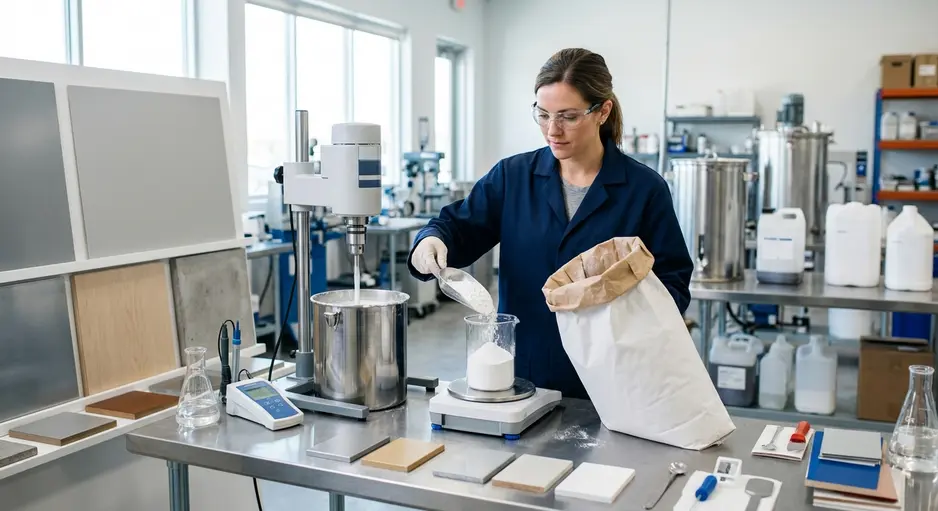
Kaolin is often described as a filler, but its role can be more useful than simple volume addition. Its fine, plate-like particles can influence pigment spacing, suspension, film structure, sheen, and application properties.
As a paint extender pigment, kaolin may support coverage and create a more even surface. It is used as a coating filler mineral in water-based paints and selected solvent-based systems. Results depend on the grade, binder, pigment volume concentration, and dispersion process.
Kaolin is not a one-for-one replacement for titanium dioxide. However, selected grades may improve pigment spacing and help extend part of the TiO₂ package. Calcined products are often considered when opacity improvement is a main goal.
Any reduction in titanium dioxide should be gradual. Formulators must test contrast ratio, gloss, viscosity, color, scrub resistance, and storage stability before approving a change.
The best kaolin clay for paint industry use is the grade that meets the actual performance target. A product intended for a flat wall paint may not be suitable for a higher-gloss industrial finish.
Hydrated kaolin, also called hydrous kaolin, is processed without the high-temperature treatment used to make calcined products. Processing may include washing, classification, drying, and micronizing.
Hydrous grades are often chosen for smoothness, suspension, controlled sheen, particle packing, and cost efficiency. Some grades may also offer relatively low oil absorption. Properties can vary with the mineral deposit and refining method.
Calcined kaolin powder is made by heating kaolin under controlled conditions. This changes its structure and can create porous or aggregated particles with useful optical properties.
In a suitable formulation, calcined kaolin may work as an opacity improvement additive and titanium dioxide extender. It can also support a matt finish. Its oil demand is often higher than that of hydrous material, although this depends on the grade.
Typical role: Hydrated kaolin is often used for filling, rheology, suspension, and finish control. Calcined kaolin is commonly considered for opacity and TiO₂ extension.
Surface effect: Hydrated grades may support a smooth surface finish. Calcined grades may produce a more structured or matt effect.
Oil demand: Hydrated products often have lower oil demand, but this is grade-dependent. Calcined products may require more binder or dispersant.
Best choice: Selection depends on the binder, target gloss, pigment volume concentration, application method, and cost goal.
High brightness kaolin clay powder can support clean shades and stable color development. However, brightness is not the same as whiteness or hiding power. A bright powder may still perform poorly if its particle distribution or dispersion is unsuitable.
Buyers should check whether brightness is reported under an ISO or TAPPI method. Values from different test methods may not be directly comparable.
Fine particle size kaolin can improve film uniformity and surface feel. It may also support pigment packing and application consistency. Yet a single average size does not describe the full distribution.
Ask for D50, top-cut information, coarse residue, and the percentage below a stated micron size. The technical data sheet should also identify whether the result came from sedimentation, laser diffraction, or another method.
Good mineral packing may support improved paint durability and film strength. Kaolin can also play a useful role in anti-cracking coating formulations. Still, it cannot prevent cracking by itself.
Binder level, PVC and CPVC, substrate condition, film thickness, drying, and outdoor exposure remain critical. Excess mineral loading may weaken scrub resistance or increase binder demand.
The benefits of kaolin powder in coatings should be measured through total formulation cost. An optimized mineral package may reduce dependence on more costly pigments while maintaining required performance.
Price per tonne does not show the full picture. Buyers should also consider dosage, oil absorption, production time, reject rates, freight, and cost per litre of compliant paint.
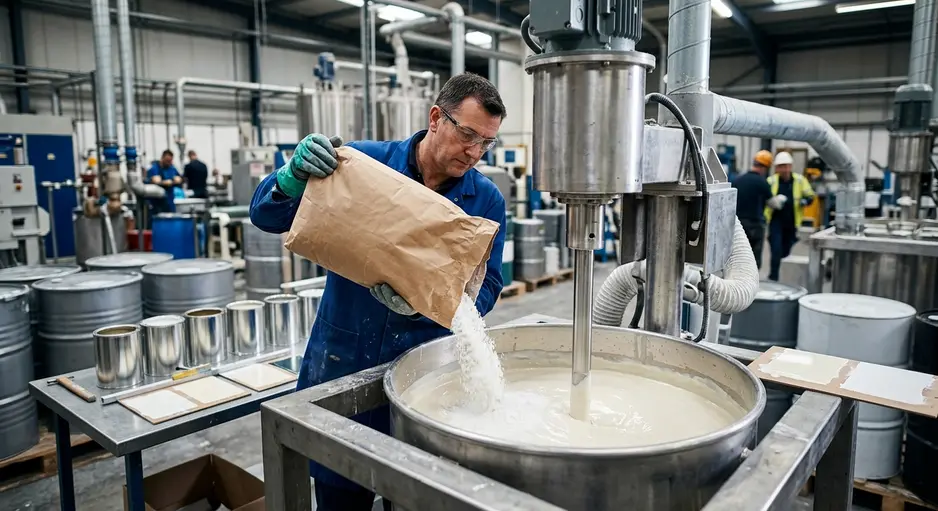
Oil absorption gives formulators an indication of binder demand. It can influence viscosity, flow, pigment loading, dispersant use, and cost. ASTM D281 is a common test method for this property.
Terms such as premium kaolin clay powder or high brightness mineral filler do not guarantee low oil absorption. Always compare measured values and confirm their effect in a trial batch.
“Refined” is a broad commercial term. It may refer to washing, classification, impurity removal, drying, micronizing, or a combination of these steps. Ask the kaolin powder supplier to define the processing route and provide a current technical data sheet.
Start with the current control formulation. Test hydrous and calcined kaolin separately while keeping solids, PVC, application conditions, and film thickness controlled.
If TiO₂ reduction is a goal, use small steps instead of making a large change at once. Measure wet viscosity, hiding, gloss, drying, scrub resistance, and storage stability. The final comparison should focus on cost per litre of paint that meets the specification.
A reliable kaolin clay supplier should provide clear specifications, representative samples, technical documents, and batch-level quality information. Buyers should also assess traceability, packaging quality, complaint handling, and delivery consistency.
Request a technical data sheet, safety data sheet, and recent certificate of analysis. Guaranteed limits are more useful than broad statements about a “premium” product.
International buyers should review moisture-resistant packaging, palletization, container loading, Incoterms, lead times, and port handling. Common documents may include a commercial invoice, packing list, certificate of origin, SDS, and TDS.
A company should be described as a kaolin clay exporter worldwide only when it can confirm that capability. Buyers should verify market availability, supply continuity, and landed cost before placing an order.
Paint and coating manufacturers can contact Jay Ganesh Minerals to ask about current grades, specifications, samples, packaging, production availability, and supply details. These points should be confirmed directly before commercial approval.
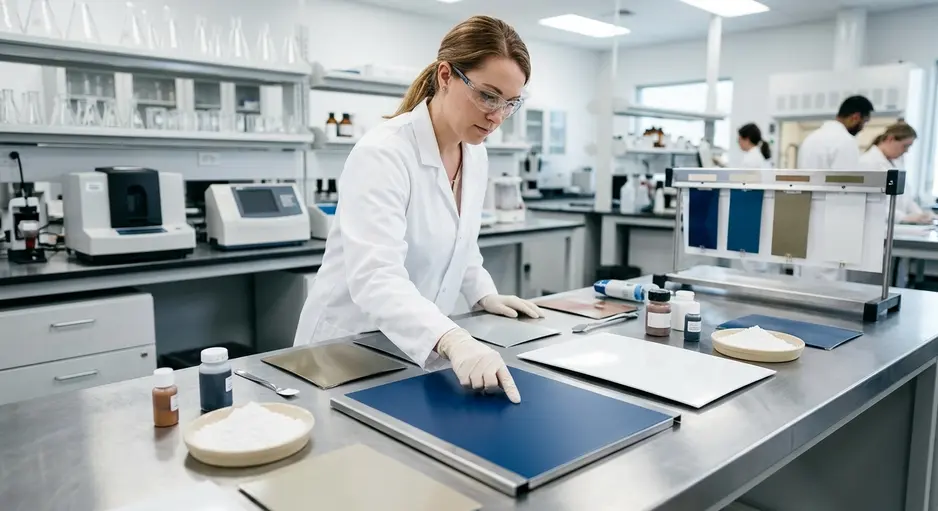
Brightness matters, but particle size, undertone, residue, dispersion, and oil absorption can have an equal or greater effect on paint performance.
Two suppliers may report different values because they use different methods. Confirm the standard and equipment before comparing brightness or particle-size results.
A low-cost grade may raise binder demand, reduce opacity, or slow production. Compare delivered cost, required dosage, paint performance, and manufacturing efficiency.
Laboratory results must be checked in real mixing, dispersion, application, and drying conditions. Production equipment can produce different results from small laboratory batches.
Successful kaolin selection starts with matching mineral properties to the paint system. Hydrated and calcined grades offer different benefits, and neither should be chosen from price or brightness alone.
Looking for industrial kaolin clay for paints and coatings? Contact Jay Ganesh Minerals to request current specifications, packaging information, a technical data sheet, and a representative sample. Testing the material in your own formulation is the best way to select a dependable kaolin clay powder supplier for paint industry or coating applications.
Both hydrated and calcined kaolin are used. Hydrated grades often support smoothness, suspension, and finish control. Calcined grades are often selected for opacity and partial TiO₂ extension.
Neither type is universally better. The correct choice depends on gloss, rheology, hiding, oil demand, binder type, and formulation cost.
A suitable grade may improve pigment spacing and film structure. Actual opacity depends on the full pigment package, dispersion quality, PVC, binder, and dry-film thickness.
Partial extension may be possible, especially with selected calcined products. No fixed replacement level applies to every paint. Controlled testing is essential.
There is no universal size. Fine grades may support smoothness, while broader or structured distributions may suit matt finishes. The optimum range depends on the target coating.

Whatsapp Chatx
Hi! Click one of our representatives below to chat on WhatsApp or send us email to jrt@jayganeshminerals.com

|
Mr. RAJESH +91 99130 87000 |
|
|
Mr. JIGNESH +91 89800 70055 |