
Indonesian Coal Grades Explained and Their Applications
06 August, 2026

06 August, 2026
The terms white clay, kaolin clay and China clay often appear to describe the same material. In many products, they do. Yet there is an important technical difference. Kaolin is a clay material made mainly of kaolinite, while white clay is a broader name based on color or commercial use.
This distinction matters when buying clay for ceramics, paper, paint, plastics, rubber or cosmetics. Color alone cannot confirm how a mineral will perform. Buyers should compare composition, processing, particle size, brightness and other test results before selecting a grade.

White clay and kaolin clay are often used as interchangeable names. However, they are not always technically identical. “White clay” is a descriptive or commercial term. Kaolin refers to a clay material composed mainly of the mineral kaolinite.
White clay commonly refers to kaolin in face masks, cleansers, pottery products and ceramic raw materials. The term may also appear on refined industrial powders that have a pale color, controlled fineness and low visible impurities.
A product called refined white clay may contain other minerals, additives or processed blends. Its properties can also change based on whether it is washed, classified, surface-treated or calcined. An unspecified white powder should not be assumed to be pure kaolin.
Always review the product specification sheet and certificate of analysis. These documents provide more useful information than a product name or visual sample.
Kaolin is a naturally occurring clay material made mainly of kaolinite. Kaolinite is an aluminosilicate mineral with the commonly cited formula Al₂Si₂O₅(OH)₄. Natural deposits may also contain quartz, mica, iron compounds, titanium minerals and other materials.
The type and level of these impurities affect brightness, fired color, abrasion and processing behavior. This is why two visually similar powders may produce different results in the same formulation.
China clay is a traditional name for kaolin. The term reflects kaolin’s historical connection with Chinese porcelain. It remains common in ceramic and industrial markets, where China clay and kaolin usually refer to the same basic material.
Refining can include washing, screening, magnetic separation and particle classification. These steps may improve purity, whiteness, dispersion, residue control and particle-size consistency. “Refined” describes processing, not a separate mineral species.
Hydrous kaolin, sometimes called hydrated kaolin, retains its natural hydroxyl structure. It is often selected where plasticity, fine particles or natural plate-like morphology are useful.
Calcined kaolin is produced by controlled heat treatment. Calcination changes its structure, reduces plasticity and bound moisture, and can improve opacity or functional filler performance. Hydrous and calcined grades should not be substituted without testing.
The first difference is terminology. White clay describes appearance or market position, while kaolin has a mineral-based identity. The second is consistency. An unspecified white clay may vary more between deposits and suppliers.
The third difference is grade performance. Beneficiation, calcination and surface treatment can change brightness, moisture, plasticity, dispersion and oil absorption. These properties often matter more than the name printed on the packaging.
A bright white powder is not automatically the best grade. Ceramic producers may need low iron and a suitable fired color. Paint formulators may value dispersibility and oil absorption. Paper producers may focus on brightness and fine particle size.
Terms such as premium kaolin clay and high brightness kaolin should therefore be supported by measurable data. They are grade descriptions, not separate mineral types.
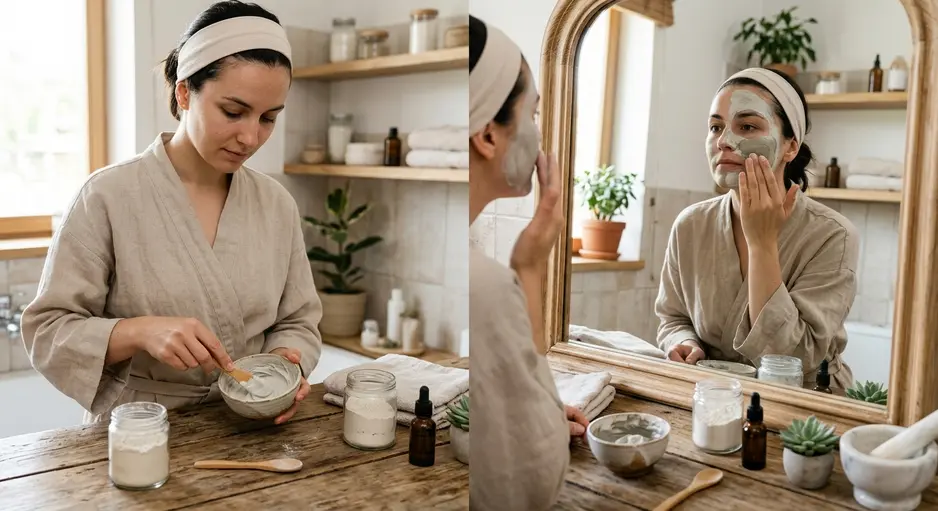
Fine particle size clay can support smooth ceramic surfaces, even coatings and pleasant cosmetic textures. Good classification may also improve dispersion. Actual results depend on particle-size distribution, formulation and processing conditions.
High brightness kaolin is valuable in white ceramic bodies, paper and coatings. Certain calcined grades can improve opacity in selected paper and paint systems. The level of improvement must be confirmed through formulation trials.
As an aluminosilicate material, kaolin is widely used in fired products. During ceramic firing, it undergoes structural changes that contribute to the final body. Firing behavior depends on mineral content, impurities, temperature and kiln cycle.
Cosmetic grade kaolin can absorb surface oil and support cleansing. It is generally less swelling than bentonite, which makes it useful in mild masks, powders and soaps. It should not be presented as a treatment for a medical skin condition.
Kaolin may help adjust stiffness, dimensional stability, finish and production economics in rubber and plastic filler applications. Benefits vary with loading level, particle size, surface treatment and compatibility with the base material.
Hydrous kaolin contributes plasticity and workability to many ceramic bodies. High-purity grades can support a pale fired color in porcelain, sanitaryware and tiles. In a typical body, kaolin is blended with materials such as feldspar, silica and other clays to balance forming and firing behavior.
Calcined material may be added where lower shrinkage or specific fired properties are needed. Ceramic buyers should assess iron, titanium, alkalis, sieve residue, plasticity, shrinkage and fired color.
Kaolin is used as a paper coating mineral because fine particles can support smoothness, print quality and ink holdout. Brightness and particle-size distribution are key buying criteria. Some calcined grades also improve opacity and bulk in suitable paper systems.
As a paint and coatings filler, kaolin can influence opacity, sheen, suspension and coating structure. Formulators should compare brightness, dispersibility, oil absorption and fineness rather than selecting a grade by color alone.
Kaolin may serve as a filler or extender in rubber products. The required rubber industry mineral depends on reinforcement needs, moisture limits, fineness and surface treatment. Processing trials help determine the correct loading level.
In plastics, kaolin may support stiffness, dimensional control, surface quality and cost optimization. Surface-treated grades can offer better compatibility with certain polymer systems. The right choice depends on resin type and process temperature.
Cosmetic formulators use kaolin in masks, powders, soaps and cleansing products. Suitable material should have application-specific documentation covering purity, heavy metals and microbial controls. Users should follow product directions and avoid inhaling loose powder.
Select hydrous material when natural morphology, plasticity or general filling performance is important. Consider calcined kaolin when lower bound moisture, altered structure, brightness or opacity is required.
Neither option is universally better. A grade that performs well in paint may not meet the forming needs of a ceramic body. Run an application trial before making a direct substitution.
Request a representative sample and evaluate it under actual production conditions. Compare dispersion, processing time, reject rates and finished-product quality. Total process performance is more useful than price per tonne alone.
After approval, confirm batch-to-batch limits and the supplier’s quality-control process. This reduces the risk of production changes after a large order arrives.
A reliable kaolin clay manufacturer or international kaolin clay supplier should provide clear technical documents. Ask for a certificate of analysis, safety data sheet, product specification, batch traceability and relevant test information.
When evaluating a white clay exporter worldwide, also consider lead time, moisture-resistant packaging and destination requirements. Avoid choosing a supplier only because its powder looks whiter or has a lower quoted price.
Buyers may contact Jay Ganesh Minerals to discuss application requirements, kaolin powder specifications, samples, packaging and export needs. Request technical information and test the proposed grade under your own production conditions before placing a large order.
The white clay vs kaolin clay question comes down to precision. Kaolin is a defined clay material rich in kaolinite, while white clay is a wider commercial description. China clay is generally another name for kaolin.
For dependable results, choose material by grade, processing method and verified specifications. Review the technical documents, request samples and run production trials. Whether the end use is ceramics, paper, paint, rubber, plastics or cosmetics, application-based testing is the safest way to select the right clay.
In most industrial and ceramic settings, there is no practical difference. China clay is a traditional name for kaolin, linked to its historic use in Chinese porcelain production.
Calcined kaolin is used in paper, paints, coatings, plastics, rubber and ceramics. Depending on the grade, it may provide opacity, brightness, lower moisture or altered filler performance.
Yes. Kaolin clay for ceramics can provide plasticity, whiteness and an alumina-silica contribution. The correct grade depends on body composition, forming method, firing temperature and desired fired color.
Cosmetic-grade material is widely used in formulated skincare products. Suitability depends on purity, formulation and individual sensitivity. Patch test new products, follow directions and avoid inhaling loose powder.
Judge quality through measurable properties such as mineral content, brightness, particle size, residue, moisture and consistency. The best grade is the one that meets your process requirements, not simply one marketed as premium.

Whatsapp Chatx
Hi! Click one of our representatives below to chat on WhatsApp or send us email to jrt@jayganeshminerals.com

|
Mr. RAJESH +91 99130 87000 |
|
|
Mr. JIGNESH +91 89800 70055 |