
How to Choose the Right Mineral Supplier for Export Business
03 June, 2026

04 May, 2026
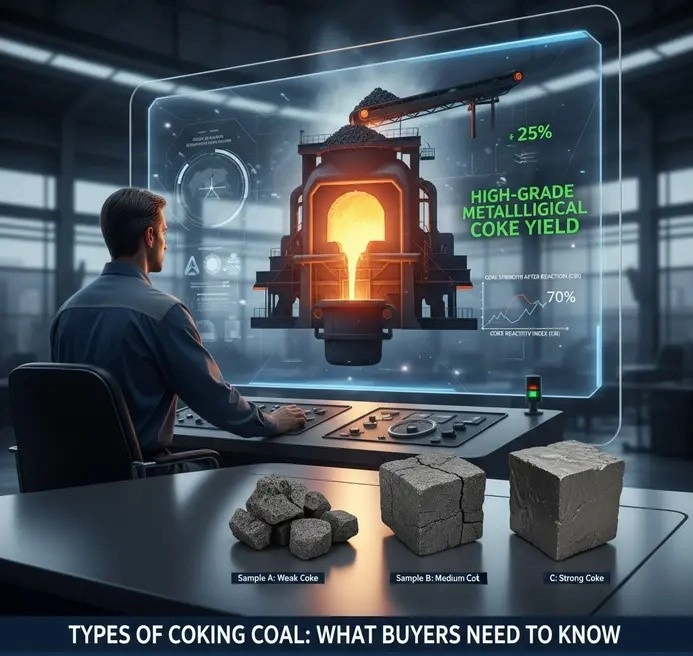
Understanding the different types of coking coal is critical for steel manufacturers, procurement managers, and international traders aiming to optimize blast furnace performance and control production costs. In over a decade of experience working with steel plants and global traders.
Unlike thermal coal, metallurgical coal must possess specific caking properties to form strong coke in a coke oven battery. The wrong specification can lead to poor coke quality parameters, operational instability, and contract disputes. This guide breaks down everything serious buyers need to know before signing their next supply agreement.

Coking coal, also known as metallurgical coal, is used to produce coke for blast furnace ironmaking. The key difference between thermal non-coaking vs coking coal lies in their coal rank and caking properties. Only coal with suitable plasticity and fluidity can soften, swell, and resolidify into strong coke.
Critical indicators include:
Coke is the structural backbone of the blast furnace feedstock blend. It provides permeability, acts as a reducing agent, and supports the burden column. Without strong coke, furnace efficiency declines rapidly.
Modern plants optimize performance through:
Based on extensive industry work, buyers must know more than just price per ton. The most important coke quality parameters include:
Hard coking coal is considered the best coking coal for coke production due to its strong caking ability and high CSR output. The difference between low volatile vs high volatile coking coal significantly influences coke strength and yield.
Major sourcing regions include:
Semi-soft coal has lower caking properties but offers cost advantages. Many steel plants rely on semi soft coking coal export markets to reduce overall blend cost while maintaining acceptable CSR.
PCI coal for blast furnace use does not require strong caking properties. Instead, it is injected directly to replace a portion of coke, reducing costs and lowering coke rate.
Optimized PCI rates can:
Coking coal for foundry and steel plants differs slightly in specification. Foundry coke specifications prioritize:
This makes careful selection among the various types of coking coal for steelmaking essential.

When assessing coking coal grades and specifications, focus on measurable performance indicators:
Improper sampling is one of the leading causes of disputes. International coking coal sampling and testing standards such as ISO and ASTM must be strictly followed.
Coal blending for coke oven design is both science and strategy. Proven strategies include mixing premium HCC with SSCC to optimize cost-performance balance.
Bulk metallurgical coal suppliers Australia dominate the premium HCC segment. Australian coal commands pricing premiums due to consistent quality and high CSR output.
Coking coal exporters focus largely on semi-soft and PCI segments. The semi-soft coking coal export market has grown due to cost competitiveness.
The coking coal price per ton India fluctuates based on global benchmarks and freight.
Get the Right Coking Coal for Your Industry
Selecting the right types of coking coal requires deep understanding of specifications, blending strategy, and supply dynamics. From hard coking coal to semi-soft and PCI grades, each category plays a distinct role in steel production.
Based on extensive industry work, the most successful buyers prioritize quality consistency, CSR performance, and supplier reliability over short-term price advantages. Partnering with experienced global suppliers ensures long-term operational stability and cost efficiency.
Make informed sourcing decisions, evaluate technical parameters carefully, and work with trusted metallurgical coal experts to secure sustainable steel production performance.
The main types include hard coking coal, semi-soft coking coal, and PCI coal. Each serves a specific role in blast furnace and coke production.
Hard coking coal has stronger caking properties and produces higher CSR coke, while semi-soft coal is used primarily for cost-effective blending.
PCI coal is injected directly into the blast furnace and does not require strong caking ability.
Low ash, low sulfur, optimal volatile matter, high FSI, and strong CSR results define premium metallurgical coal.
The coking coal price per ton India varies depending on origin, grade, freight rates, and global index pricing.

Whatsapp Chatx
Hi! Click one of our representatives below to chat on WhatsApp or send us email to jrt@jayganeshminerals.com

|
Mr. RAJESH +91 99130 87000 |
|
|
Mr. JIGNESH +91 89800 70055 |